Quick Answer
A business operations audit examines how the company actually runs: priorities, decisions, workflows, handoffs, ownership, systems, meetings, and performance visibility. The goal is to identify the lead operating bottleneck and create a practical roadmap for what to fix first.
The Core Idea
An operations audit should help the founder see the business more clearly.
Not the business as it appears in the org chart.
Not the business as it is described in a strategy deck.
The business as it actually runs.
Where does work start?
Where does it stall?
Who owns the outcome?
Who decides when there is a tradeoff?
Where does client context live?
Which meetings create action, and which meetings create more noise?
Where does the founder keep stepping back in?
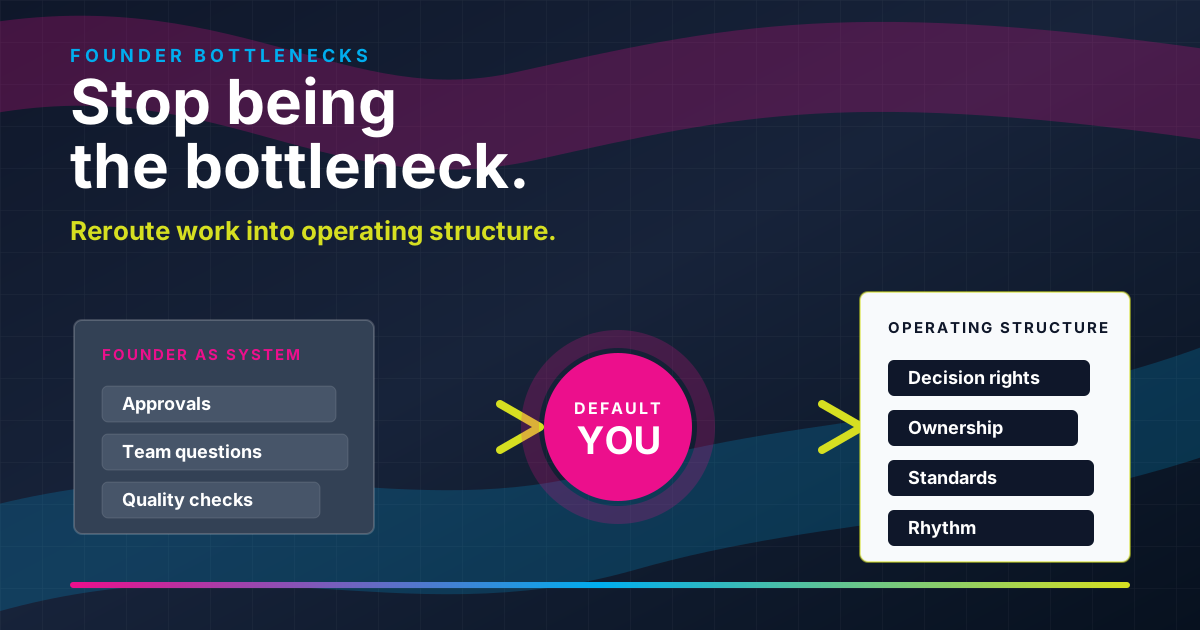
These questions matter because founder-led companies often hide the real operating system inside the founder.
The founder remembers the client history. The founder knows the quality bar. The founder decides the exceptions. The founder notices when priorities drift. The founder translates strategy into action.
An audit makes those patterns visible.
The goal is not to criticize the founder or the team. The goal is to identify the operating structure that needs to mature next.
This is also why an audit should usually come before choosing between an operations consultant, fractional COO, or implementation partner. If you are comparing those options, read Fractional COO vs Operations Consultant: What Is the Difference? after you understand what the audit is designed to reveal.
If ongoing operating leadership is one of the options, first clarify what a fractional COO actually does for a founder-led company and when a founder should hire a fractional COO. Those are different questions from whether one process needs fixing.
What an Operations Audit Should Review
A useful audit should look across the operating system, not just one process.
- Current reality
What is happening right now? Where is the business moving, stuck, overloaded, or unclear?
- Decision flow
Which decisions come back to the founder, and which decisions should be owned elsewhere?
- Ownership
Who owns outcomes, not just tasks? Where is accountability visible or vague?
- Workflow and handoffs
Where does work pass between people, teams, clients, or tools? Where does context get lost?
- Operating rhythm
What meetings, reviews, scorecards, and follow-up loops keep the business moving?
- Founder dependence
Where does the company still rely on founder memory, founder approvals, founder standards, or founder coordination?
- Operating risk
Where is the business fragile if the founder is unavailable, distracted, or overloaded?
What the Audit Should Produce
The output should not be a thick report that sits unused.
The best output is a clear diagnosis and a practical next sequence.
That usually includes:
- The lead operating bottleneck.
- The recurring symptoms connected to that bottleneck.
- The operating risk if nothing changes.
- The first few changes that would create leverage.
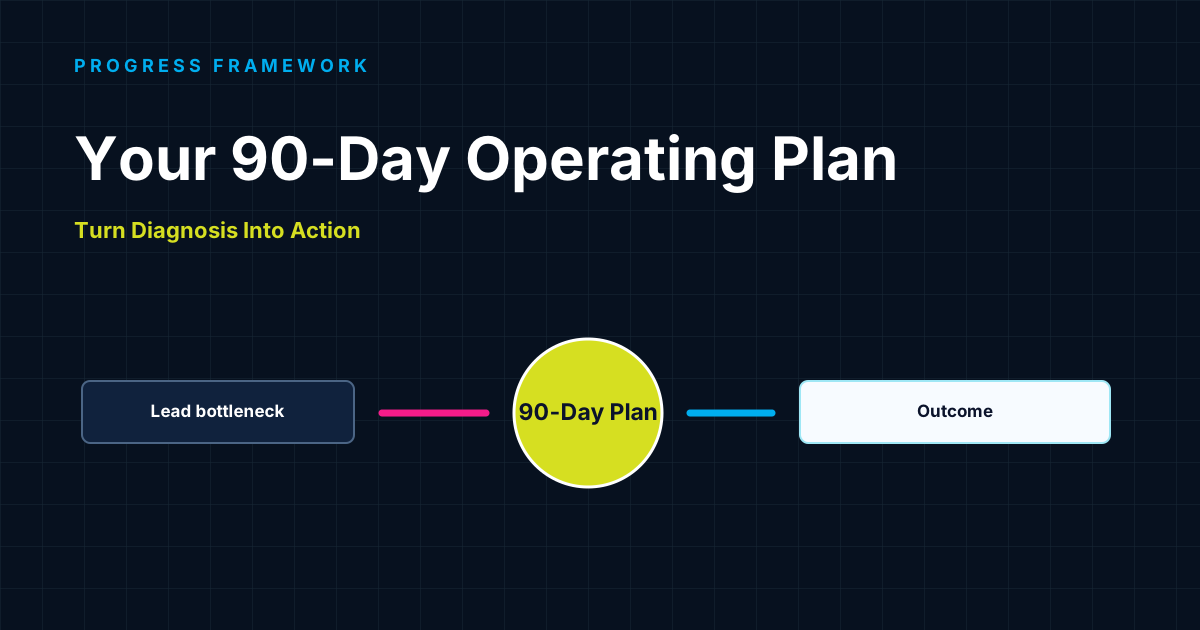
- A 90-day roadmap.
- A recommendation for whether the next step is implementation support, fractional COO advisory, internal ownership, or another path.
The audit should help the founder decide what not to fix yet.
The next engagement should match that diagnosis. Read what operating support looks like after the bottleneck is diagnosed and when to move from audit to implementation support before choosing a delivery model.
That may be the most valuable part.
If the diagnosis points toward ongoing support, review what affects fractional COO support cost alongside the proposed scope, responsibilities, and time commitment.
Most founder-led companies have more possible improvements than capacity to implement. The audit should identify the lead domino.
The PROGRESS Lens
What is true about the business today?
What recurring constraint creates the most drag?
What should the business be able to do differently?
What support, systems, or leadership capacity is missing?
Where is the company fragile because of founder dependence?
What is the first practical sequence after diagnosis?
Mini Case
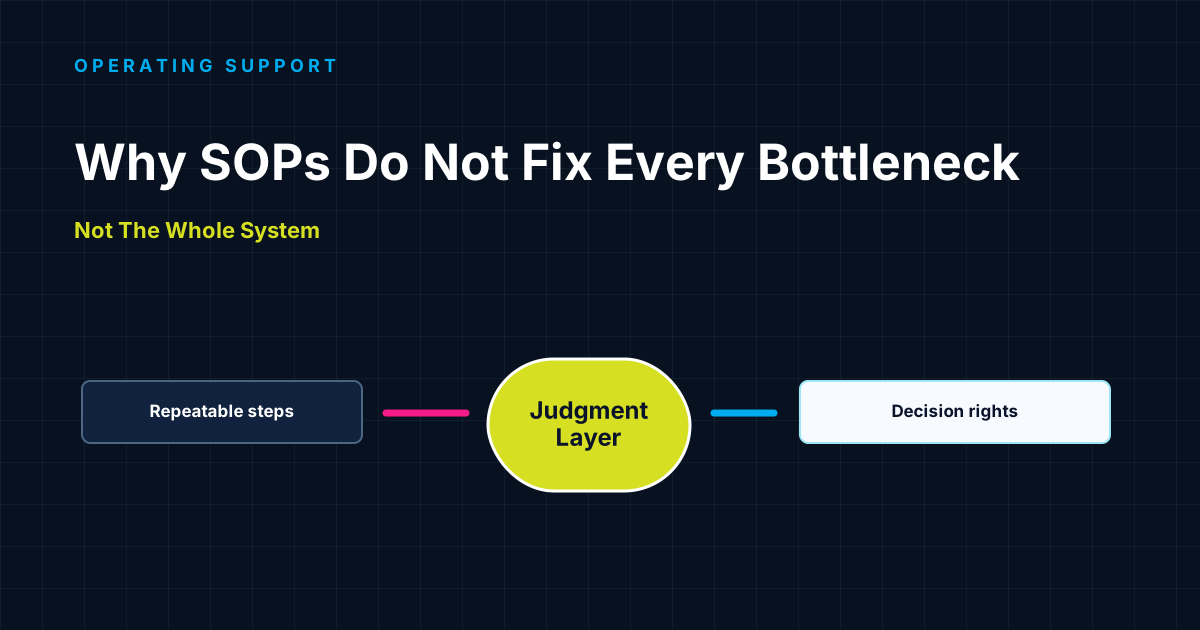
A founder wants to improve operations and believes the company needs better SOPs.
During the audit, the repeated friction is clear: decisions about client priorities keep returning to the founder because ownership and escalation rules are unclear.
More SOPs may help later, but they are not the first fix.
The audit identifies decision rights as the lead bottleneck. The 90-day roadmap focuses on who decides what, when to escalate, what standards apply, and how decisions are reviewed.
The founder avoids spending months documenting workflows that would still break at the decision point.
What To Do Next
List the symptoms.
Capture where work slows down, repeats, escalates, or depends on the founder.
Separate symptoms from constraints.
Do not assume the loudest problem is the lead bottleneck.
Map how work actually moves.
Look at decisions, handoffs, ownership, meetings, tools, and founder involvement.
Identify the risk.
Ask what becomes fragile if the founder is unavailable or the business keeps growing.
Choose the lead operating fix.
Start with the bottleneck that would create the most leverage if improved.
Turn the diagnosis into a 90-day roadmap.
The audit should end with movement, not just insight.
Common Mistakes
Mistake 1: Auditing processes without auditing decisions
Many operating problems are decision problems wearing process clothing.
Mistake 2: Creating a long list of fixes
A useful audit should prioritize. A long list can overwhelm the team and dilute action.
Mistake 3: Ignoring founder dependence
Founder-led companies need to ask where the business still runs through the founder, even when the team is capable.
Mistake 4: Jumping from audit to software
Software can support an operating system, but it cannot replace unclear ownership or weak rhythm.
Mistake 5: Treating the audit as the fix
Diagnosis creates clarity. The business still needs implementation, ownership, and review.
Mistake 6: Waiting until everything is urgent
An audit is most useful before the operating issues become constant emergencies.
About Steven Lin
Steven Lin is a Business Architect and business consultant based in Vancouver, helping founder-led companies diagnose bottlenecks, strengthen operating structure, and scale beyond founder dependency.
He works with founders through the Scaling Bottleneck Audit, PROGRESS Implementation Sprint, and Fractional COO Advisory. His audit work focuses on finding the lead bottleneck and turning it into a practical operating roadmap.