Quick Answer
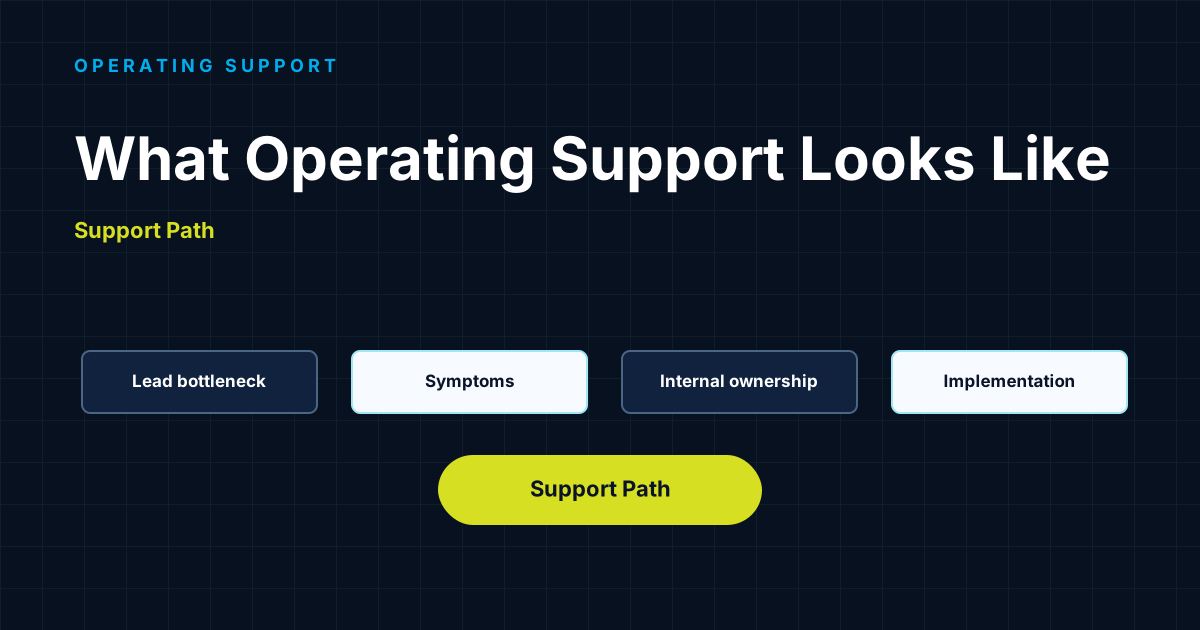
Move from audit to implementation support when the lead bottleneck is clear but the business needs help turning the diagnosis into working operating structure. That may include decision rights, ownership, workflow redesign, scorecards, meeting cadence, handoffs, or adoption support.
The Core Idea
An audit answers the question: what is really slowing the business down?
Implementation support answers the next question: how do we make the business operate differently?
Those are related, but they are not the same.
Many founder-led companies stop too early. They get clarity, feel a burst of relief, and then return to the same operating pattern because the team has not changed how decisions, ownership, workflows, or reviews actually happen.
The founder may understand the bottleneck.
The team may even agree with the diagnosis.
But the business still needs to install the new behavior.
That is where implementation support fits.
It helps translate the roadmap into specific operating assets, team conversations, decision rules, review rhythms, handoff changes, and accountability loops.
Without that translation, an audit can become a smarter way to describe the same old problem.
If you have not completed the diagnostic step yet, read What Happens During a Business Operations Audit? first. Implementation support works best when the audit has already identified the lead bottleneck and the first operating change.
Signs You Are Ready for Implementation Support
You may be ready when the diagnosis is specific enough to act on.
For example, the issue is not "operations are messy." The issue is that decision rights are unclear, client handoffs depend on founder memory, managers do not own outcomes, or the weekly meeting does not create follow-through.
Implementation support fits when several of these are true:
- The bottleneck has been named.
The company knows what operating constraint is creating the most drag.
- The first outcome is clear.
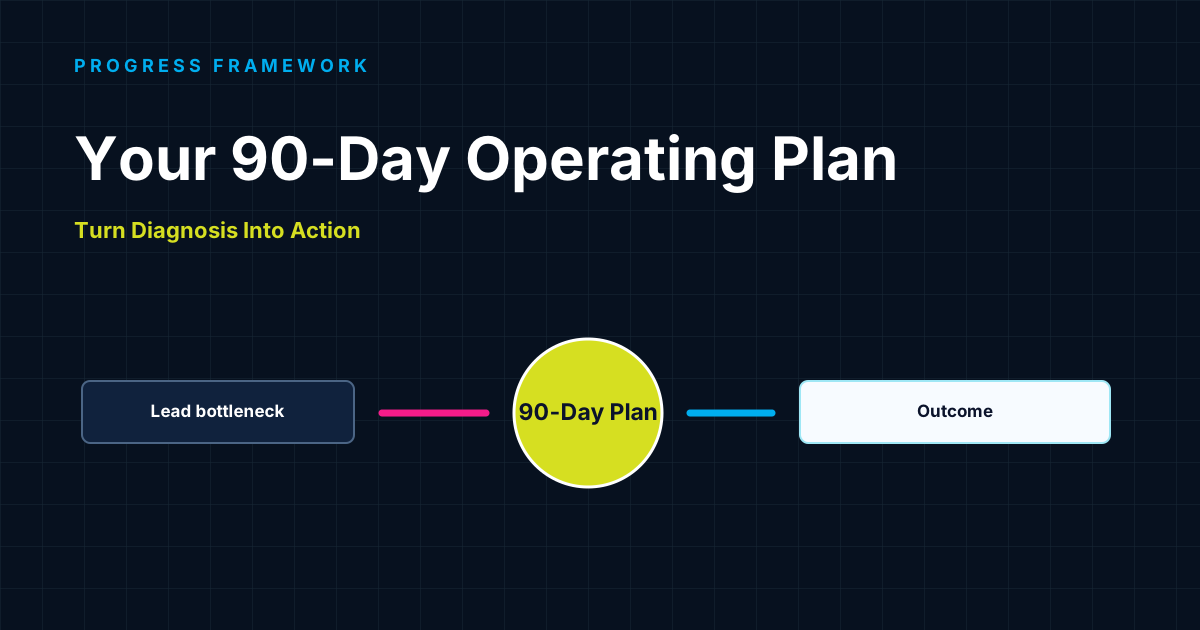
There is a practical 90-day result to create, such as fewer escalations, clearer ownership, better handoffs, or a stronger operating rhythm.
- The team needs structure around adoption.
People need help changing how work moves, not just hearing what should improve.
- The founder does not have spare capacity to drive the change alone.
Implementation requires attention, facilitation, review, and follow-through.
- The fix crosses multiple people or functions.
Cross-functional change usually needs coordination so the new structure sticks.
- The business is not ready for ongoing advisory yet.
A sprint may install the first operating fix before deciding whether Fractional COO Advisory is needed.
When You Should Not Move Yet
Do not move to implementation support if the bottleneck is still vague.
If the team cannot name what should change, implementation may turn into scattered activity.
Do not move yet if the founder is not willing to make decisions about ownership, standards, authority, or cadence.
Implementation requires choices.
Do not move yet if the business is trying to fix everything at once.
The first implementation cycle should focus on the lead bottleneck, not every possible improvement.
In those cases, return to diagnosis or narrow the roadmap.
The PROGRESS Lens
What did the audit reveal about the current operating reality?
Which bottleneck should be addressed first?
What should the first implementation cycle make possible?
What founder time, team clarity, or operating stability should improve?
What support, ownership, or tools are needed to install the fix?
What sequence will move the diagnosis into adoption?
Mini Case
A founder completes an audit and learns that the company has a decision rights bottleneck.
The team is capable, but routine decisions keep returning to the founder because no one knows which calls they can make independently.
The audit creates the diagnosis. Implementation support turns it into operating reality.
Over 90 days, the company defines decision zones, escalation rules, review cadence, and examples of good judgment. Team leads start making more decisions without waiting for founder approval.
The founder does not disappear. The founder stops being the default decision point for work the team is ready to own.
What To Do Next
Confirm the lead bottleneck.
Make sure the first implementation cycle is focused on the constraint that creates the most drag.
Define the 90-day operating outcome.
Name what should be different by the end of implementation.
Identify the operating assets needed.
This may include a decision map, handoff standard, review rhythm, scorecard, ownership model, or workflow redesign.
Decide who must participate.
Implementation usually requires the founder, team leads, and anyone who owns the affected workflow.
Build the adoption rhythm.
The fix needs review, adjustment, and reinforcement, not just launch.
Decide what comes after the sprint.
After implementation, reassess whether the business needs ongoing Fractional COO Advisory or can carry the new rhythm internally.
Common Mistakes
Mistake 1: Treating the audit report as the implementation
A report creates clarity. The business still needs to change how work, decisions, and accountability happen.
Mistake 2: Trying to implement everything at once
Too many changes dilute adoption. Start with the lead bottleneck.
Mistake 3: Skipping ownership
Implementation fails when no one owns the new operating behavior after the initial work is done.
Mistake 4: Installing tools before changing decisions
Software may support the fix, but it cannot replace decision rights, standards, or accountability.
Mistake 5: Expecting the founder to drive implementation alone
If founder capacity is already the bottleneck, founder-led implementation may stall quickly.
Mistake 6: Moving to ongoing advisory too early
Sometimes a focused sprint should come before a longer Fractional COO Advisory relationship.
About Steven Lin
Steven Lin is a Business Architect and business consultant based in Vancouver, helping founder-led companies diagnose bottlenecks, strengthen operating structure, and scale beyond founder dependency.
He works with founders through the Scaling Bottleneck Audit, PROGRESS Implementation Sprint, and Fractional COO Advisory. His implementation work helps founders turn diagnosis into operating structure the team can actually use.