Quick Answer
An operations consultant usually diagnoses or improves a specific operational problem. A fractional COO provides ongoing part-time operating leadership, cadence, accountability, decision support, and cross-functional rhythm. The best choice depends on whether your business needs recommendations, implementation, or sustained operating leadership.
The Core Idea
Fractional COO and operations consultant are often used as overlapping labels.
That makes buying support harder than it should be.
A founder may think they need a fractional COO because they are overloaded. Another founder may hire an operations consultant because they want process improvement. In both cases, the real issue may be different.
The business might need clearer decision rights.
It might need better handoffs.
It might need management accountability.
It might need a weekly operating rhythm.
It might need a roadmap before it needs ongoing support.
The title matters less than the operating job to be done.
An operations consultant is usually a better fit when you need analysis, recommendations, workflow design, process improvement, or a project-based operating fix.
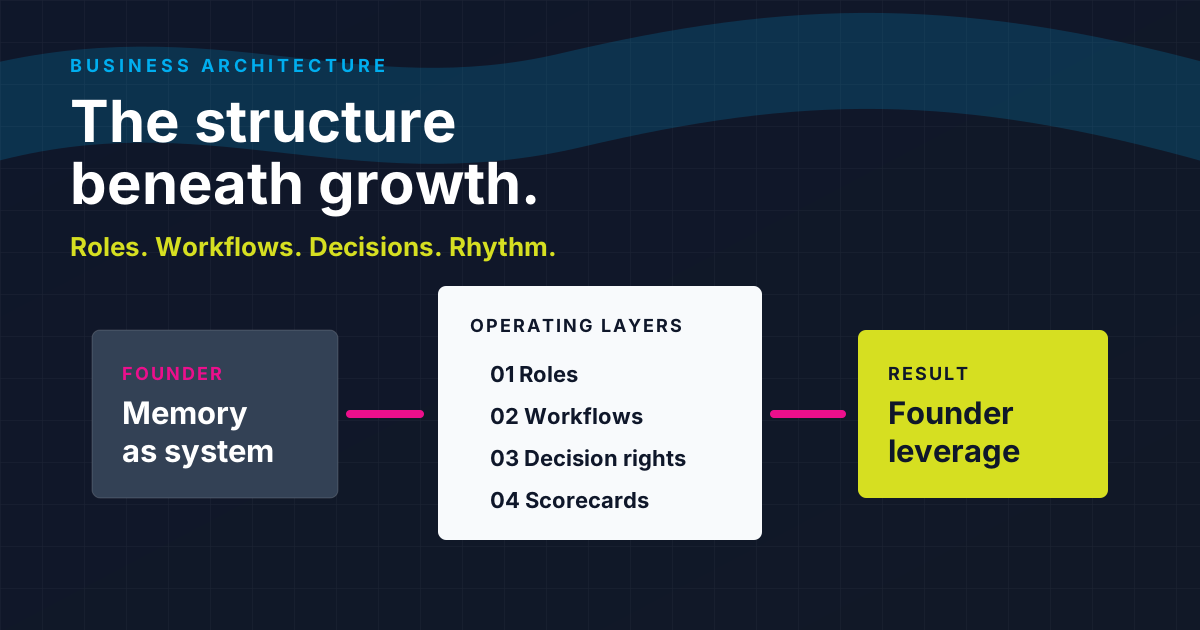
A fractional COO is usually a better fit when the company needs recurring senior operating rhythm: priorities, decision support, leadership meetings, accountability, scorecards, and execution cadence.
The problem is that many founder-led companies ask for the heavier support before the bottleneck is visible.
That can turn support into a foggy retainer.
Diagnosis should come first.
If you are comparing titles because you are not sure whether the business is ready for ongoing operating leadership, start with When Should a Founder Hire a Fractional COO? and What a Fractional COO Actually Does for a Founder-Led Company.
When an Operations Consultant Fits Better
An operations consultant may be a better fit when the problem is specific and project-shaped.
For example:
- Client onboarding is inconsistent.
- Delivery handoffs keep breaking.
- The business needs process documentation.
- A workflow needs redesign.
- The team needs a clearer dashboard or scorecard.
- The founder needs recommendations before deciding what support to hire.
Operations consulting is useful when the question is: what should change in this part of the business?
It can also be useful when the company needs an outside perspective without committing to ongoing leadership support.
But consulting has a limitation.
Recommendations do not install themselves.
If the team lacks capacity, ownership, or cadence, a consulting project may produce a useful roadmap that still does not become operating reality.
When a Fractional COO Fits Better
A fractional COO may be a better fit when the issue is not one workflow, but the operating rhythm of the company.
For example:
- Priorities change too often.
- Managers need clearer ownership.
- The founder is still the default decision-maker.
- Leadership meetings do not create follow-through.
- Cross-functional work breaks between people.
- The company needs senior operating judgment but not a full-time COO.
Fractional COO support is useful when the question is: how do we keep the business moving with clearer rhythm, ownership, and accountability?
The role should help the company make better operating decisions repeatedly, not just once.
Where a Scaling Bottleneck Audit Fits
Sometimes the founder is not ready to choose either option.
They can feel the symptoms, but the root cause is unclear.
That is where an audit fits.
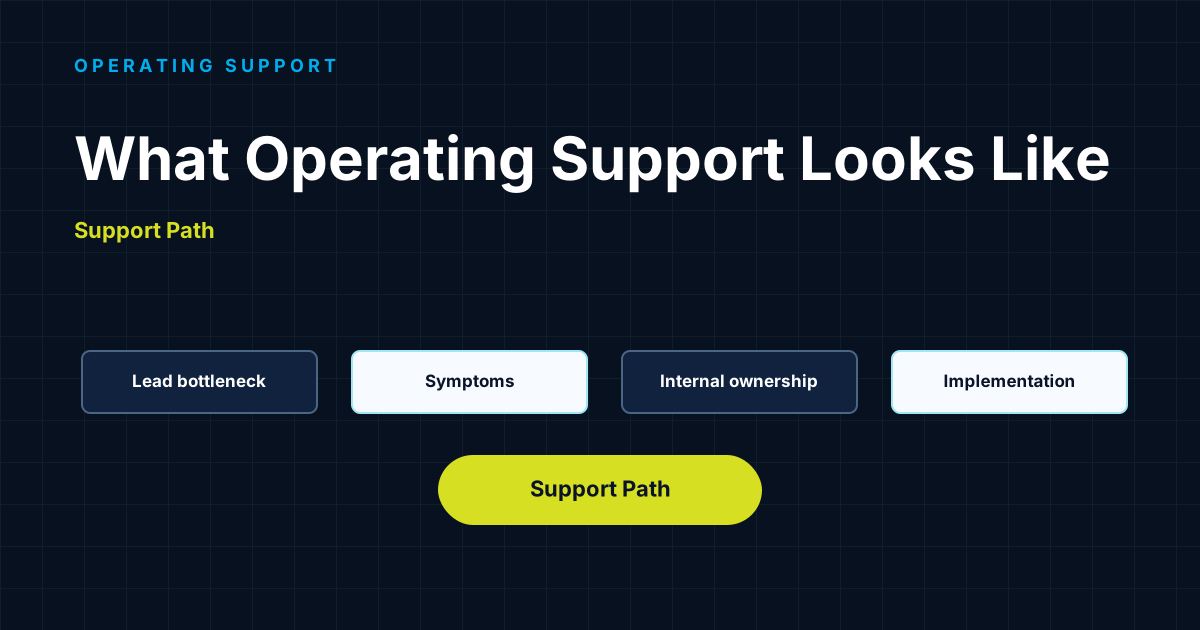
An audit helps identify the lead operating bottleneck before choosing support. It can clarify whether the business needs consulting, implementation, fractional COO advisory, a full-time hire, or a narrower fix.
This matters because a decision rights problem does not always need a fractional COO.
A workflow problem does not always need ongoing advisory.
A founder role problem does not always need a consultant.
The right support should match the actual constraint.
The PROGRESS Lens
What symptoms are visible right now?
What constraint is making the founder look for help?
What should support actually make possible?
What support type is missing: diagnosis, design, implementation, or rhythm?
What risk grows if the wrong support type is hired?
What should happen first before committing to ongoing help?
Mini Case
A founder compares a fractional COO and an operations consultant.
The team is missing deadlines, meetings feel vague, and client delivery depends too much on founder review.
An operations consultant could document the delivery process. A fractional COO could run the operating rhythm. Both sound useful.
After an audit, the lead bottleneck becomes clearer: managers do not have decision rights or review cadence. The company needs a focused implementation sprint to define ownership, standards, and weekly review before ongoing advisory.
The founder avoids overbuying support and starts with the next practical constraint.
What To Do Next
Define the symptom.
Name what keeps repeating: missed handoffs, unclear priorities, founder approvals, weak accountability, or inconsistent delivery.
Decide whether the problem is specific or systemic.
A specific workflow problem may need consulting. A recurring rhythm problem may need fractional COO support.
Check whether the fix is known.
If the fix is unknown, start with diagnosis. If the fix is known but not installed, start with implementation.
Avoid choosing by title.
Do not hire the more impressive-sounding role. Hire the support type that matches the operating constraint.
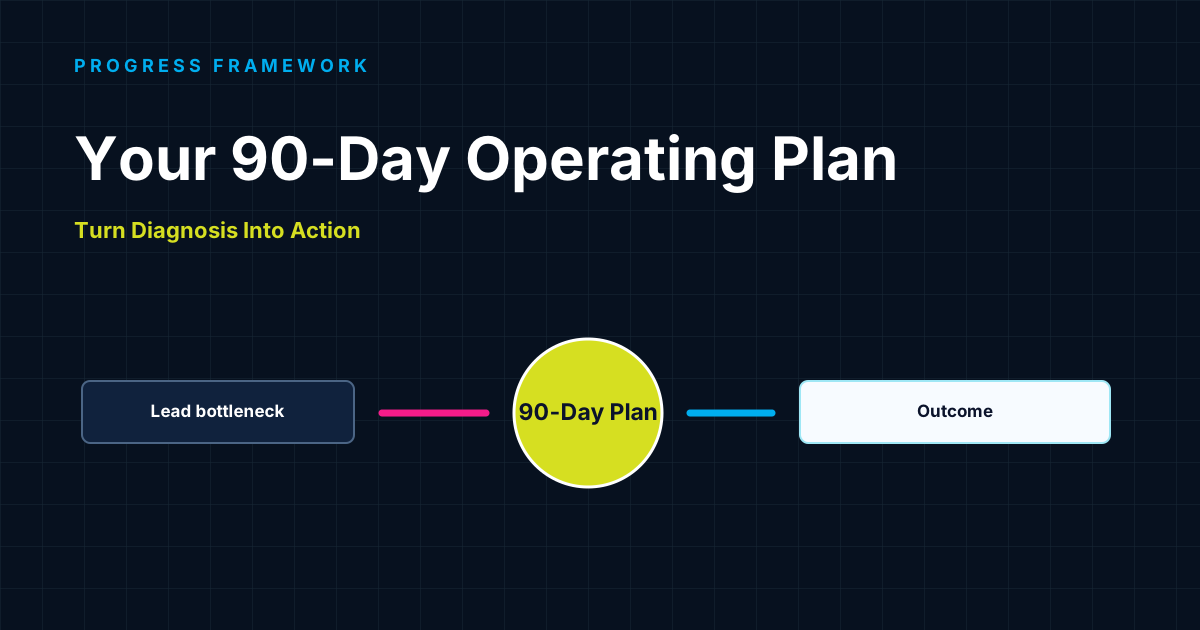
Define the 90-day outcome.
Make the support accountable to a practical change, such as fewer escalations, clearer ownership, better cadence, or more reliable execution.
Keep the founder role visible.
The support should help the founder lead at the right level, not disappear from the business.
Common Mistakes
Mistake 1: Hiring a fractional COO for a consulting problem
If the issue is narrow and project-based, ongoing advisory may be more support than the business needs.
Mistake 2: Hiring a consultant for an ongoing rhythm problem
If the problem is recurring accountability and cadence, a recommendation may not be enough.
Mistake 3: Skipping diagnosis
Without diagnosis, the founder may choose support based on frustration instead of the real constraint.
Mistake 4: Treating all operations support as the same
Operations support can mean analysis, implementation, advisory, coordination, or leadership. Define the job before choosing the label.
Mistake 5: Measuring support by activity
More meetings, reports, and documents do not matter unless the business becomes clearer and less founder-dependent.
Mistake 6: Ignoring implementation
The best diagnosis still needs adoption. If the company cannot implement, the operating problem will return.
About Steven Lin
Steven Lin is a Business Architect and business consultant based in Vancouver, helping founder-led companies diagnose bottlenecks, strengthen operating structure, and scale beyond founder dependency.
He works with founders through the Scaling Bottleneck Audit, PROGRESS Implementation Sprint, and Fractional COO Advisory. His work focuses on helping founders choose the right operating support after the bottleneck is visible.