Quick Answer
Your business depends too much on you when normal work still needs your attention to move.
If decisions wait, quality depends on your review, client context lives in your head, meetings create updates without ownership, and hiring adds coordination instead of relief, the business has likely outgrown founder-led operating mode.
The fix is not to work harder. The fix is to identify which operating layer needs to mature first: decision rights, standards, handoffs, ownership, visibility, or rhythm.
The Core Idea
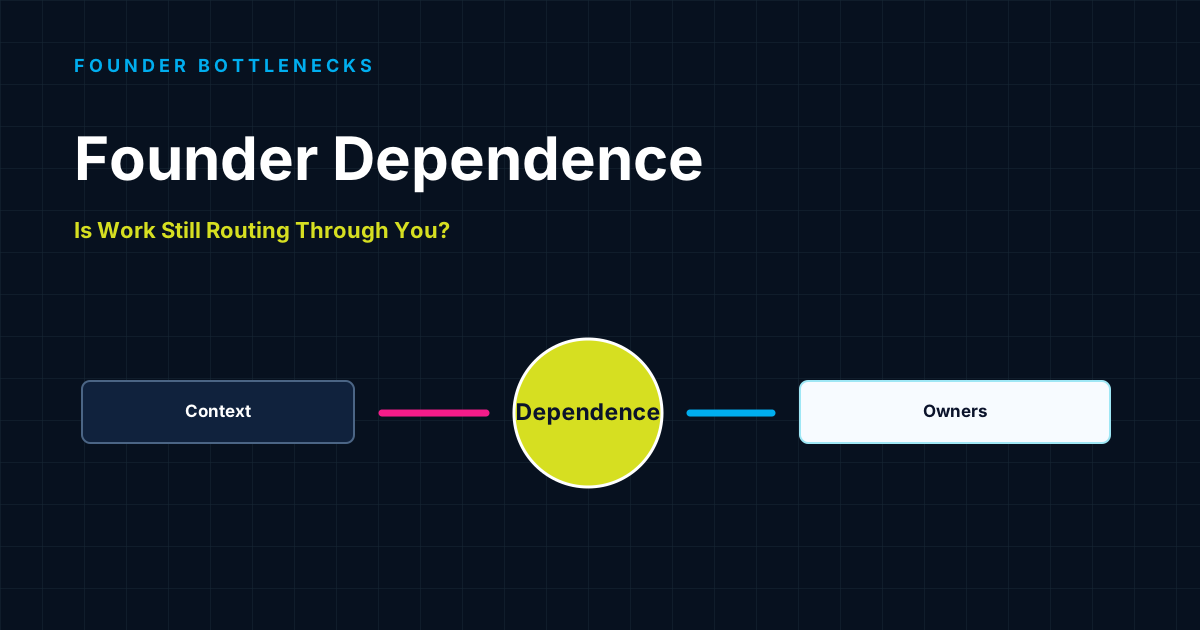
Founder-led operating mode becomes a bottleneck when the business still runs through one person's attention.
Founder-led operating mode is the stage where the business runs through the founder's memory, decisions, standards, relationships, and direct involvement.
In the beginning, that is normal. The founder knows the customers, understands the offer, sees the tradeoffs, and can make decisions quickly because they are close to everything.
But as the business grows, the same strength becomes a constraint. More clients create more exceptions. More team members create more handoffs. More work creates more decisions. More tools create more places for context to scatter.
If the operating structure does not mature, the business keeps routing uncertainty back through the founder. That is when founder-led operating mode becomes founder-dependent operating mode, or what many owners experience as a founder bottleneck.
Why This Happens
The business has not translated founder judgment into operating structure.
Founder-led companies usually do not get heavy because the founder is bad at delegation. They get heavy because the business still depends on the founder's context.
The founder may still be the person who knows what quality looks like, which client promises matter, when an exception is acceptable, which tradeoff is worth making, and which priority should win this week.
That context is useful. But if it stays trapped in the founder, the team can only move so far without checking back. The pattern may show up as a decision bottleneck, an operational bottleneck, or a business that depends on the owner for normal movement.
The 7 Signs
These are the patterns to watch.
Decisions slow down unless you are involved.
The team may know the task, but not the authority boundary. This is usually a decision-rights problem, not a motivation problem.
Delegation creates more follow-up, not more freedom.
You hand off tasks, but the work returns with questions, revisions, or uncertainty because the judgment layer is still yours.
Quality depends on your final review.
If your review is the main quality system, the business still depends on your taste, memory, and correction.
Client context still lives in your head.
When promises, sensitivities, and exceptions do not move cleanly into the operating system, founder memory becomes the hidden database.
Meetings create updates, but not ownership.
The team talks about the work, but the meeting does not create clear decisions, next steps, or accountability.
Hiring adds coordination instead of capacity.
You add people expecting relief, but the business gets heavier because every new person creates more communication and decision traffic.
Strategic work keeps losing to operational follow-up.
Your calendar fills with reviews, approvals, escalations, context transfer, and issue resolution right when the business needs higher-level leadership.
One sign on its own may be normal growth noise. The warning is the cluster: decisions wait, work returns, meetings create motion without ownership, and the same questions keep finding their way back to you. When several of these signs appear together, the issue is usually not effort. It is the operating mode underneath the effort.
For a founder-led company, this is the moment to stop asking, "How do I work harder?" and start asking, "What structure would let the business move without routing every unclear moment through me?" That shift protects the founder's attention and gives the team a cleaner path to ownership. It also makes the next fix easier to choose because the pattern is finally visible, specific, and easier to discuss with the team.
The PROGRESS Lens
Use the framework to see which operating layer needs to mature first.
Where does the business still route work, decisions, or context through the founder?
What constraint is making the team wait, ask, redo, or escalate?
What should the business be able to do without adding more founder dependence?
What standards, roles, tools, decision rules, or rhythms are missing?
Where is the business fragile because too much depends on one person's memory or judgment?
What is the smallest operating fix that would reduce the most founder dependence?
Mini Case
A new hire can help and still leave the operating mode unchanged.
A founder hires a project manager because delivery is getting harder to coordinate. At first, the hire helps. Tasks are tracked more clearly. Meetings are better organized. The founder feels some relief.
Then the same pattern returns. Client-sensitive decisions still escalate. Priorities still need founder correction. Quality standards still depend on founder review. Team members still ask what should happen when an exception appears.
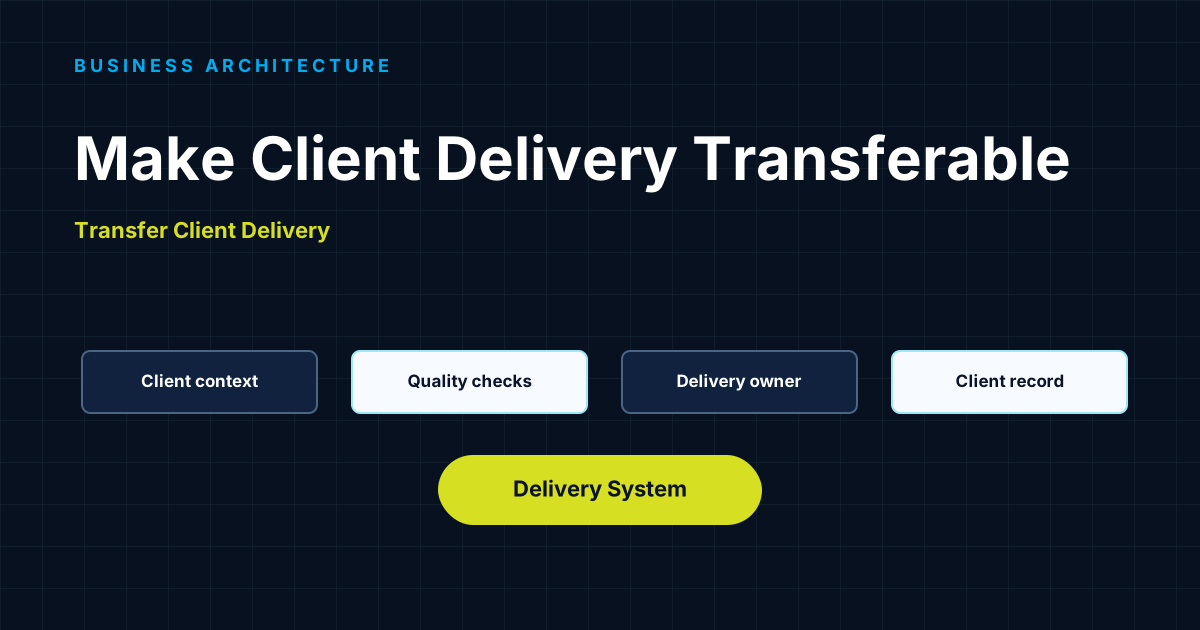
The business did not only need another person. It needed clearer decision rights, stronger handoffs, visible quality standards, and a weekly rhythm that moved ownership out of the founder's head.
What To Do Next
Start by identifying where the operating mode is creating the most drag.
Name the places where work still routes through you.
Look for repeated approvals, recurring questions, quality checks, client context requests, and decisions that should no longer require your direct involvement.
Separate capacity issues from structure issues.
If work keeps returning because authority, standards, ownership, or context are unclear, adding capacity will not solve the root problem.
Choose one operating layer to mature first.
Start with the layer creating the most drag: decision rights, handoffs, standards, meeting rhythm, role clarity, or ownership.
Use diagnosis before adding more fixes.
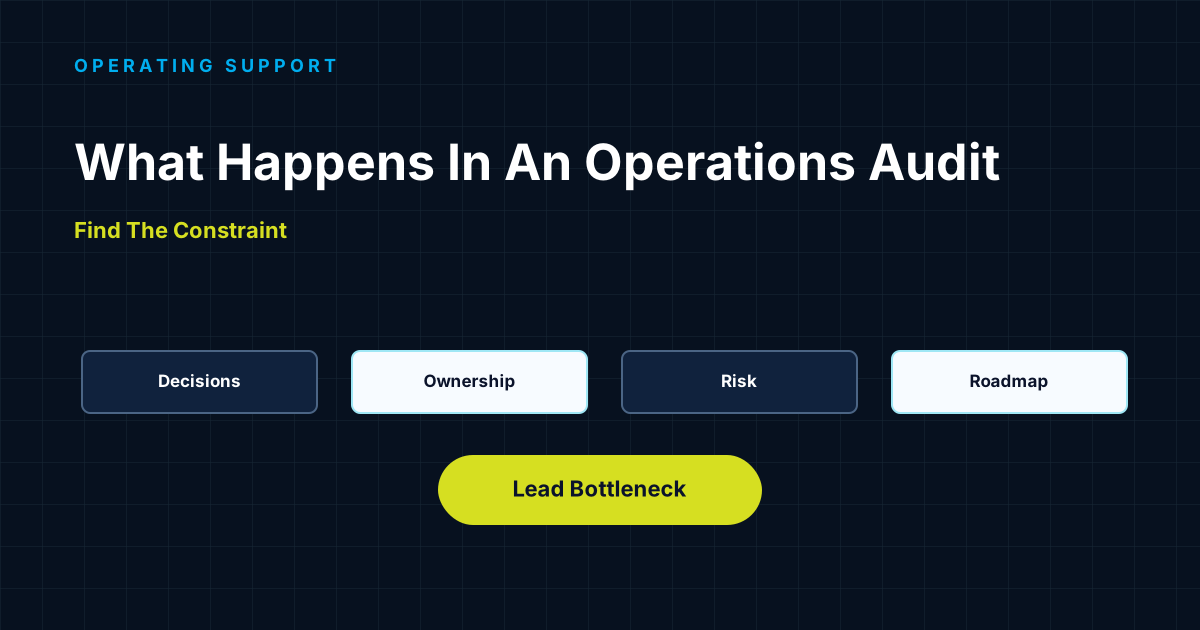
If you are not sure which layer matters most, use the Scale Readiness Diagnosis to identify where founder dependence is creating the most drag. If the signs are already clear and costly, the Scaling Bottleneck Audit can turn the diagnosis into a 90-day roadmap.
Common Mistakes
The next stage needs structure, not just more effort.
Assuming the team is the problem
Sometimes the team is capable, but the operating system does not give them enough clarity to move without the founder.
Hiring before the operating mode is clear
A new hire can help only when the business knows what authority, standards, and outcomes the role should own.
Treating delegation as the whole solution
Delegation transfers tasks. It does not automatically transfer judgment, decision rights, standards, or accountability.
Writing SOPs too early
SOPs help repeatable work. They do not solve unclear ownership or invisible quality criteria by themselves.
Waiting until the founder is burned out
The best time to mature the operating mode is when the signs are visible, not when the founder is already depleted.