Quick Answer
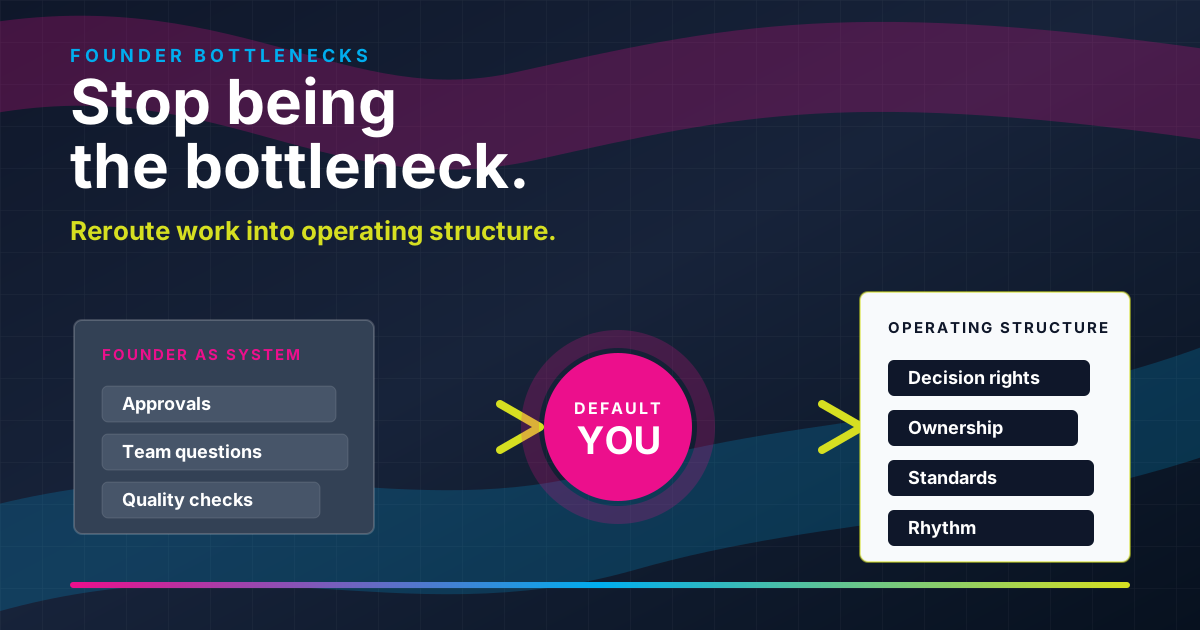
A business owner bottleneck happens when normal work still depends on the owner to move.
If decisions, approvals, quality checks, client context, or operating details still need the owner before the team can move, the business has an owner bottleneck. The founder may be capable, but the operating structure is not carrying enough judgment, standards, or decision authority yet.
The fix is to identify where work keeps routing back to you, then install the missing structure: decision rights, role clarity, visible standards, better handoffs, operating rhythm, or a focused roadmap.
The Core Idea
A founder bottleneck is not just a busy founder.
It is a business design problem. In search terms, it may look like a business owner bottleneck, a business bottleneck, or an operational bottleneck. In practice, the pattern is the same: the business still needs the founder to move normal work forward.
In the early stage, founder involvement is useful. You know the clients, the standards, the tradeoffs, the history, and the details. You can make fast decisions because the operating map lives in your head.
That works until growth adds more people, projects, clients, tools, exceptions, and decisions.
The bottleneck forms when the business cannot move without repeatedly coming back to the founder for direction, approval, context, quality control, or problem solving. If you already recognize this pattern, read How to Stop Being the Bottleneck in Your Business next.
Why This Happens
Most founder bottlenecks are created by success, not failure.
The founder builds the first version of the business through instinct, urgency, taste, client knowledge, and personal standards. That creates momentum.
But if those standards never become visible, the team has to keep asking. If decision rights are unclear, the team has to wait. If the source of truth is scattered, people have to chase context.
That is how growth starts to feel heavy. The company is not broken. It has outgrown the way it currently runs. This is founder dependence: the business may have a team, tools, and clients, but the operating system still routes through one person.
The PROGRESS Lens
Use the framework to find the operating pattern underneath the drag.
Where does work pause, wait, repeat, or route back to the founder?
Is the lead constraint decision rights, ownership, standards, visibility, or handoffs?
What support does the work need so the team can move without constant chasing?
Where is the business fragile because knowledge still lives in one person's head?
What is the next fix that would reduce the most operating drag?
Mini Case
The issue may not be training. It may be invisible judgment.
Imagine a founder with a capable team and steady client demand. The team handles delivery, but every important client decision still comes back to the founder.
At first, the founder assumes the team needs more training. But the real issue is that the founder's judgment has never been translated into decision rules, quality standards, escalation paths, and a shared operating hub.
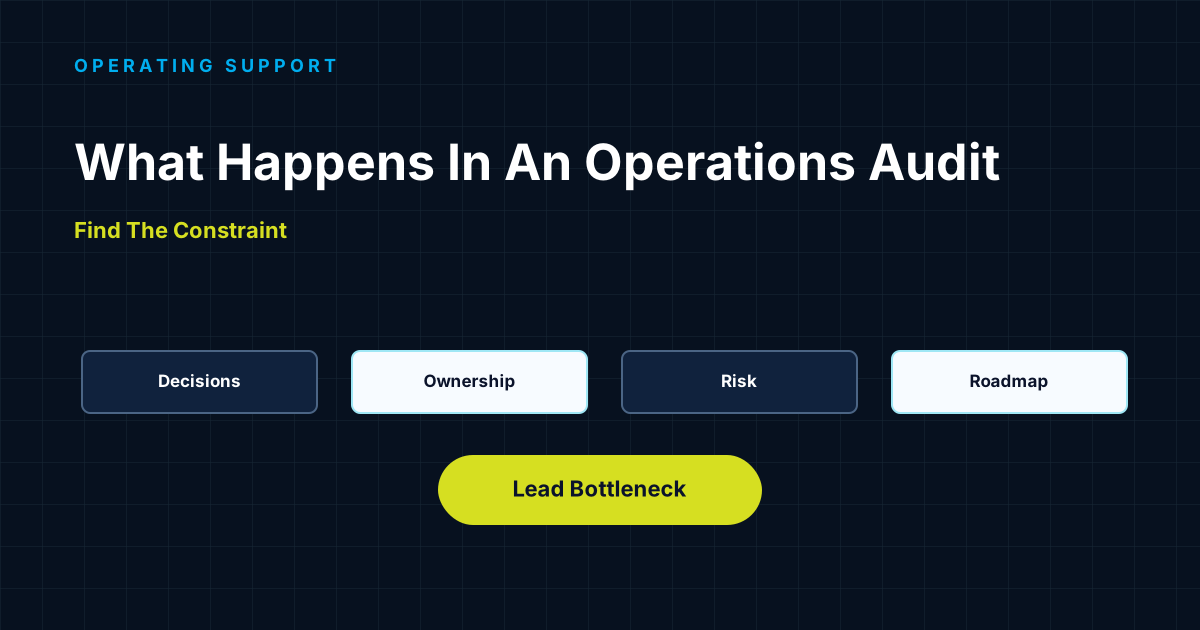
Once those are visible, the team can make more decisions without guessing. The founder is still involved where it matters, but no longer needed for every routine call. When the pattern is already costing time, speed, or ownership, the Scaling Bottleneck Audit can turn the diagnosis into a focused 90-day roadmap.
What To Do Next
Do not start by hiring, automating, or writing more SOPs.
- List the decisions that still come back to you.
- Identify where quality depends on your personal review.
- Notice which client or team questions repeat.
- Look for the handoff where work slows down.
- Ask what is missing: ownership, standards, resources, visibility, or decision rights.
The goal is not to remove the founder from the business. The goal is to stop making the founder the default operating system. Start with the Scale Readiness Diagnosis if you need clarity; move to the Scaling Bottleneck Audit when you are ready to turn the bottleneck into a roadmap.
Common Mistakes
The wrong fix can make the bottleneck worse.
Hiring before role clarity
A new hire cannot remove the bottleneck if ownership and decision rights are still unclear.
Automating a broken workflow
Automation can make confusion move faster. Map the workflow before adding tools.
Writing SOPs without decision rights
Documentation helps only when people know when they are allowed to act, decide, escalate, or stop.
Blaming the team too early
Sometimes the team is capable. They are operating inside a system that still requires founder approval.