The Core Idea
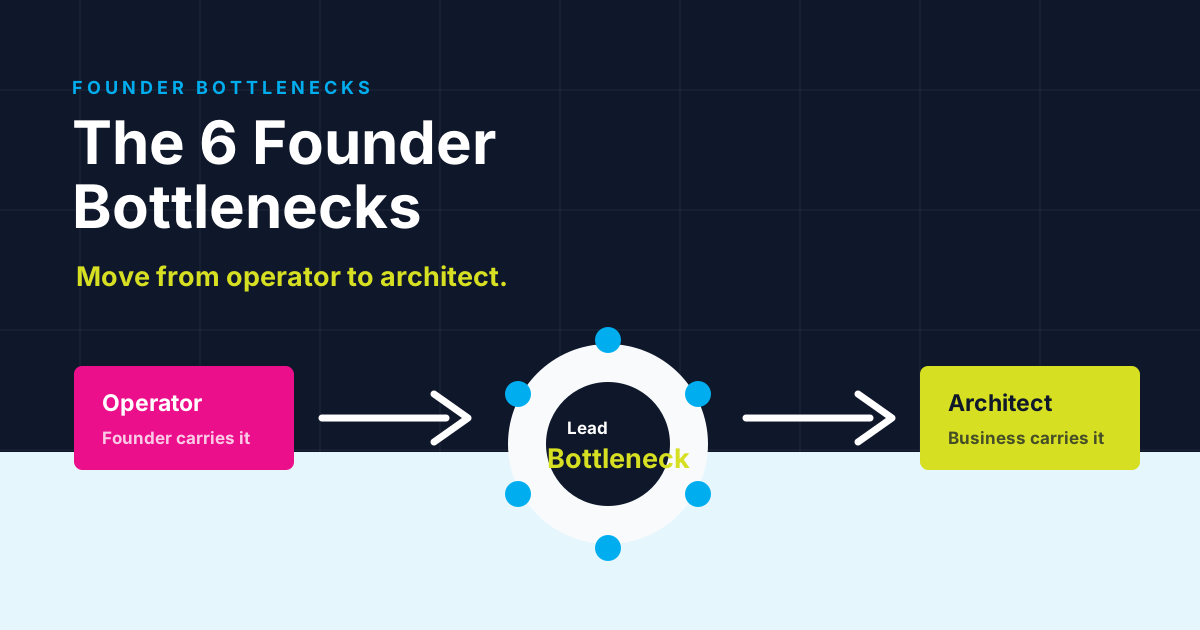
Founder bottlenecks are not all the same.
One founder may be stuck because every urgent exception comes back to them. Another may be stuck because they are personally coordinating the team, tracking priorities, and holding accountability together.
Another may be clear on vision, ideas, and strategy, but the operating structure underneath execution is too thin. Another may already be building structure, but the business still needs stronger transferability before it can scale with less founder involvement.
Those are different patterns. That is why a founder bottleneck archetype can be useful. If you need the plain-English definition first, start with what a founder bottleneck is.
It gives the founder language for the shape of the dependence. It helps them say, "This is not just that I am busy. This is the way the business currently routes uncertainty through me."
Why This Happens
As the business grows, the founder gets pulled into a role the company keeps reinforcing.
In the early stage, founder involvement is usually a strength. The founder knows the clients, the standards, the decisions, and the problems that no one else has enough context to solve yet.
That early operating mode creates momentum. Then the company grows. More work, more people, more decisions, more handoffs, more exceptions, and more expectations begin to move through the same founder-centered path.
If the business does not translate founder judgment into shared structure, the founder gets pulled into one of several patterns. They rescue. They manage. They inspire. They architect.
Quick Self-Check
Which sentence feels most familiar?
If something goes wrong, it usually comes to me.
You may be operating as the Firefighter.
If I stop checking in, things lose momentum.
You may be operating as the Manager.
I can see where the business needs to go, but execution does not keep up.
You may be operating as the Visionary.
I am building structure, but the business still needs to become less dependent on my judgment.
You may be operating as the Architect.
Choose the sentence that repeats across weeks, not the one that describes a single stressful day.
The 4 Archetypes
The archetype gives the pattern a name.
The Firefighter
The Firefighter gets pulled into urgency. Problems escalate quickly, exceptions land on their desk, and the business learns to route difficult moments through them.
The Manager
The Manager keeps the business moving through personal coordination: checking in, following up, clarifying priorities, and holding accountability together.
The Visionary
The Visionary sees the future faster than the business can execute it. They may want time off, but worry the business will lose momentum without their energy or direction.
The Architect
The Architect has started moving from personal effort to operating structure, but the business still needs stronger transferability and less dependence on founder judgment.
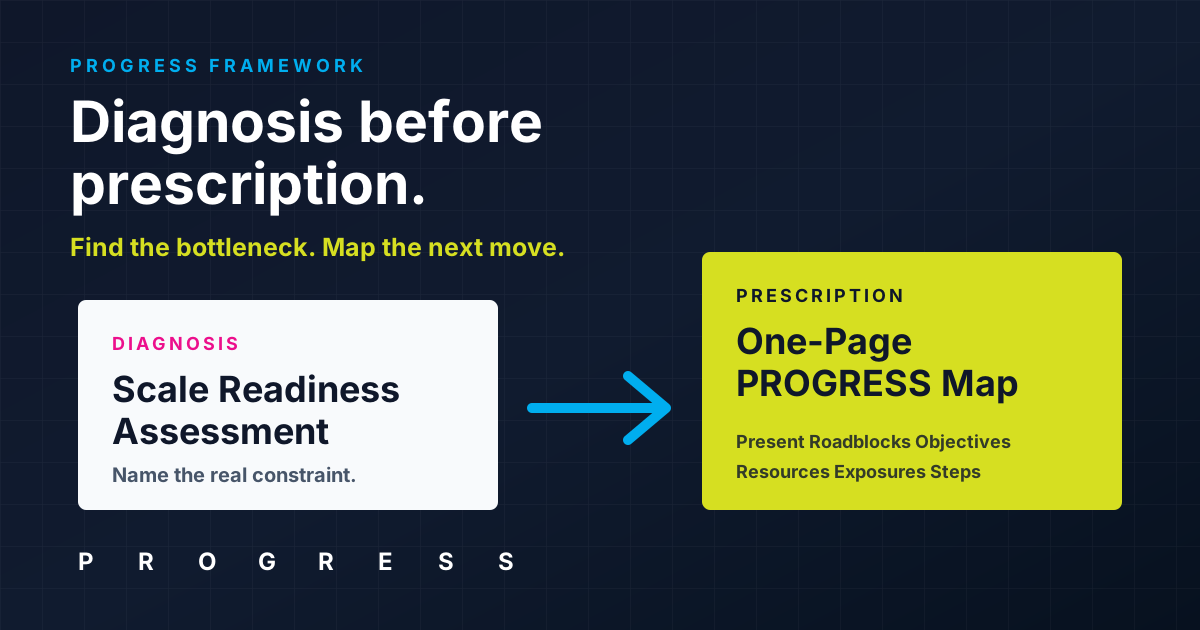
The PROGRESS Lens
The framework helps map what to do with the archetype.
Which archetype pattern is showing up most often right now?
What constraint keeps the business routing work through the founder?
What should the business be able to do without more founder involvement?
What standards, roles, tools, or rhythms are missing?
Where is the business fragile because the current pattern depends on the founder?
What is the next practical move that reduces the most dependence?
What It Does Not Tell You
An article can help you recognize yourself. It cannot fully diagnose your business.
Your real bottleneck may depend on the pattern across several areas: decision-making, delivery, ownership, operating rhythm, team alignment, documentation, growth capacity, and founder involvement.
You may also relate to more than one archetype. A founder can act like a Firefighter with clients, a Manager with the team, and a Visionary in strategy meetings.
The important question is which pattern is creating the most operating drag right now. That is why the Scale Readiness Diagnosis exists. It verifies the pattern against how the business actually runs. If you are still earlier in the recognition stage, compare these patterns against the 7 signs your business has outgrown founder-led operating mode.
Mini Case
Self-recognition is useful. Diagnosis makes it actionable.
Imagine a founder who thinks they are the Visionary. They have lots of ideas, a strong sense of direction, and a team that struggles to keep up.
But after looking more closely, the pattern is not only vision-to-execution translation. The founder is also manually checking every important project, clarifying priorities in side conversations, and following up when ownership drifts.
The actual pattern is closer to the Manager. That changes the next move: stronger operating rhythm, clearer ownership, and decision rights that let the team move without constant founder coordination.
What To Do Next
Use the archetype as a clue, then verify the pattern.
Choose the archetype that feels most familiar.
Are you mostly rescuing, coordinating, inspiring, or architecting?
Look for the repeated operating pattern.
Do not judge the archetype by one bad week. Look for what repeats across decisions, meetings, delivery, and team ownership.
Ask what the business has learned to expect from you.
Does the business expect you to solve the fire, keep the work moving, create the vision, or design the system?
Verify the pattern with the Scale Readiness Diagnosis.
The diagnosis helps confirm whether the archetype matches the broader operating reality.
Use the result to decide the next move.
If the result shows meaningful founder dependence, the next step may be a Scaling Bottleneck Audit.
Common Mistakes
The useful answer is the honest one.
Treating the archetype like a personality label
The archetype is not who you are. It is the operating role the business currently pulls you into.
Picking the archetype you like best
Most founders would rather be the Visionary or Architect than the Firefighter. The useful answer is the honest one.
Assuming one archetype explains everything
The pattern may change across different parts of the business. The question is which one creates the most drag.
Skipping diagnosis because the archetype feels obvious
Self-recognition is a clue. Diagnosis checks the clue against the operating system.