Quick Answer
A business bottleneck should be diagnosed before you choose the fix.
If your team waits, delivery feels inconsistent, growth feels heavy, or the same issues keep returning, the visible symptom may not be the real constraint. A business bottleneck can come from unclear decision rights, weak ownership, scattered context, missing standards, capacity gaps, or founder dependence.
Diagnosis protects you from hiring, automating, documenting, or reorganizing around the wrong problem. Name the lead constraint first, then choose the smallest operating fix that addresses it.
The Core Idea
Most founders move too quickly from symptom to solution.
The team waits, so the founder tries to delegate more. Delivery feels inconsistent, so the founder writes more SOPs. Meetings feel messy, so the founder adds another meeting. The founder is overloaded, so they consider hiring an operator.
Any of those fixes might be useful. But they are only useful if they match the real bottleneck.
A business bottleneck is not always a capacity problem. Sometimes it is a decision-rights problem. Sometimes it is unclear ownership. Sometimes it is scattered context. Sometimes it is missing standards. Sometimes it is founder dependence hiding inside client delivery, team communication, or weekly priorities.
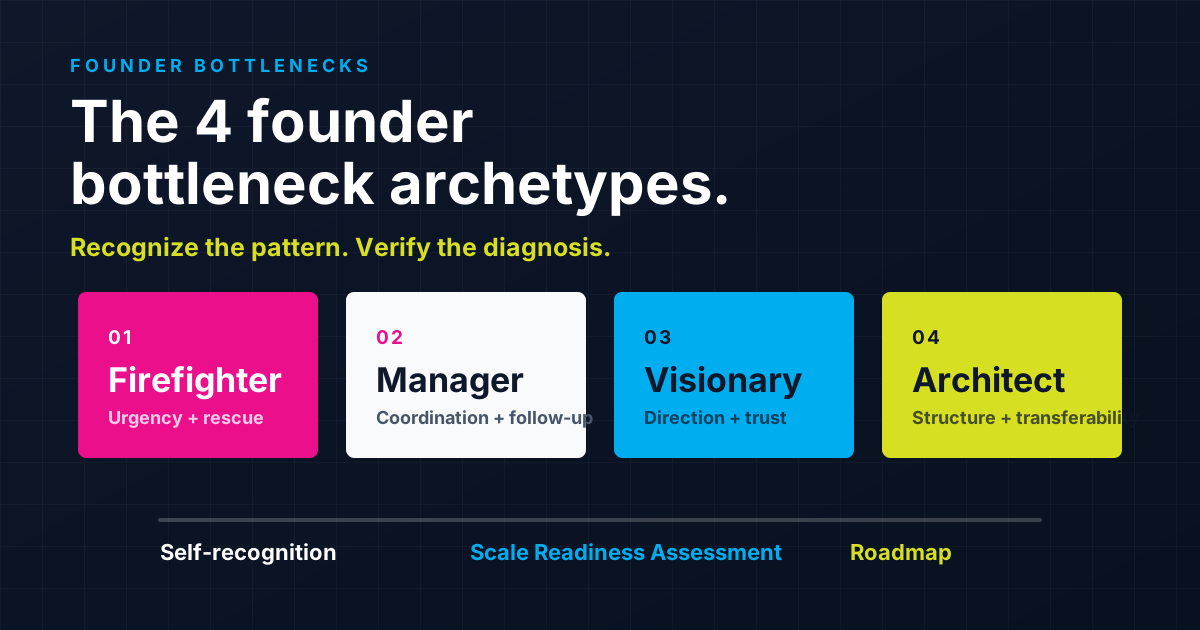
That is why diagnosis has to come before prescription. If the business keeps routing decisions, approvals, or quality checks through you, start by understanding the founder bottleneck pattern before choosing the fix.
The Scale Readiness Diagnosis helps you identify where the business is currently least ready to scale. It shows whether the drag is coming from founder dependence, operating structure, decision clarity, delivery consistency, team ownership, or growth capacity.
The PROGRESS Framework App helps you take that diagnosis and turn it into a usable operating map. It gives the bottleneck a shape: what is happening now, what is blocking movement, what the business needs to accomplish, what resources are missing, where the risk lives, and what should happen next.
Why This Happens
Founder-led companies often grow faster than their operating structure.
In the early stage, the founder can hold everything together through memory, urgency, taste, and direct involvement. That works when the team is small, the client base is manageable, and the number of decisions is still low enough to carry personally.
Then the company grows. There are more clients, more team members, more tools, more exceptions, more handoffs, and more decisions. The founder still knows the most context, so the business keeps routing uncertainty back through them.
Delegation does not solve unclear decision rights. SOPs do not solve missing ownership. Hiring does not solve scattered standards. Automation does not solve a broken workflow. More meetings do not solve a missing operating rhythm.
This is why the order matters. A fix that works for one bottleneck can make another bottleneck louder. Hiring may help a capacity constraint, but it can add more management drag if ownership is unclear. Automation may help a repeatable workflow, but it can spread confusion faster if the workflow is already broken. Diagnosis protects the business from solving the wrong problem with more intensity.
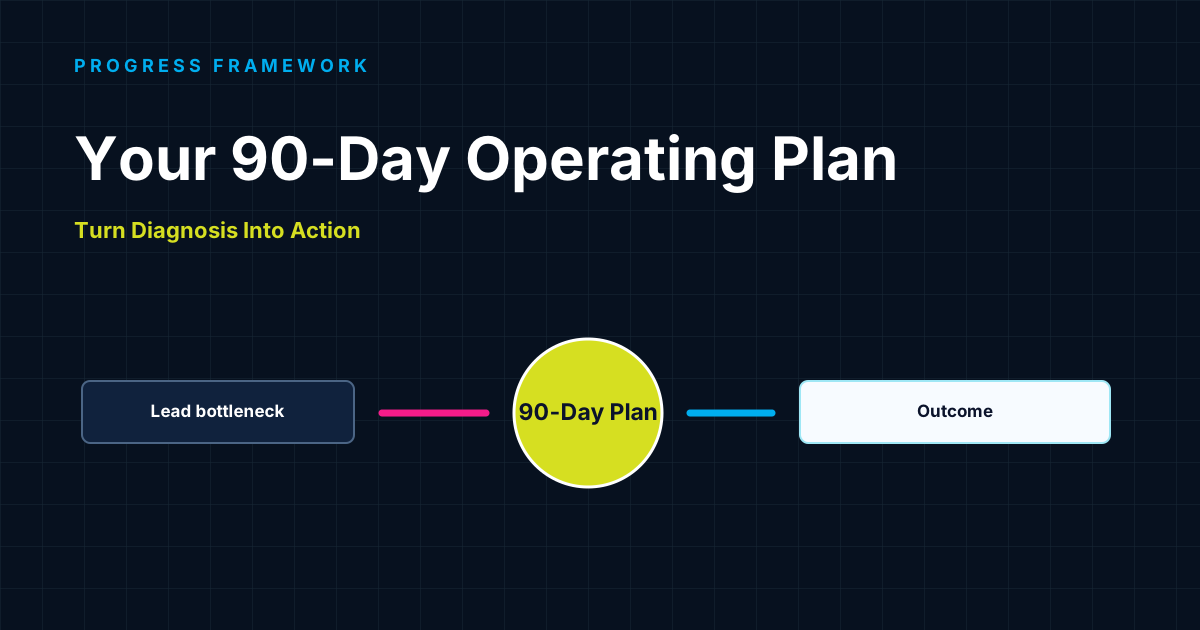
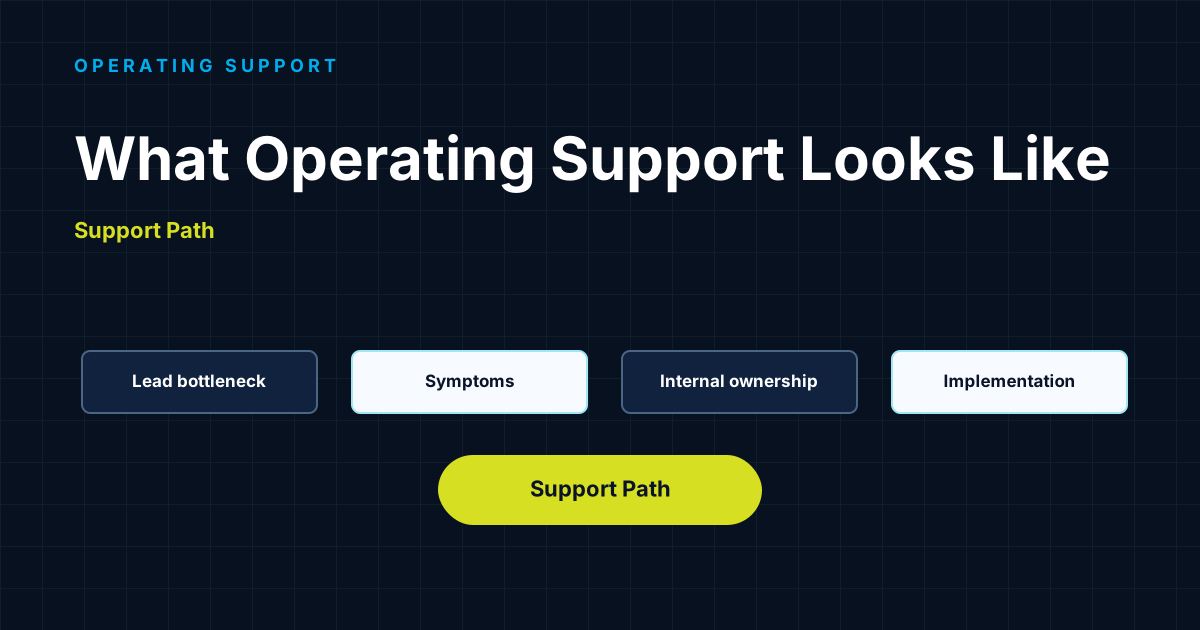
The business needs a sequence: diagnose the bottleneck, map the operating reality, and choose the next fix based on the constraint. If you are still naming the symptoms, compare them against the 7 signs your business has outgrown founder-led operating mode.
The PROGRESS Lens
The map turns diagnosis into a practical prescription.
What is actually happening in the business right now?
What constraint is blocking movement?
What does the business need to accomplish without adding more founder dependence?
What should improve if the bottleneck is addressed?
What people, tools, standards, rhythms, or support are missing?
Where is the business fragile because the current structure depends too much on one person?
Why does this bottleneck matter now?
What is the next practical move?
Mini Case
The founder does not need to delegate more random tasks.
Imagine a founder of a growing service business. Revenue is up. The team is larger. Clients are happy enough. But the founder is exhausted because too many decisions still come back to them.
At first, the founder assumes the problem is delegation. So they delegate more tasks. But the work keeps returning. The team still asks for approval. Client-sensitive decisions still escalate. Quality still depends on founder review. Weekly priorities still need founder correction.
The issue was not task volume. The diagnosis shows a decision-rights bottleneck with hidden quality standards and weak ownership rhythm.
Now the prescription changes. The founder maps which decisions return most often, who should own them, what standards the team needs to use, when escalation is useful, what weekly rhythm keeps ownership visible, and what first step will reduce the most founder dependence.
What To Do Next
Use diagnosis to choose a smaller, more accurate fix.
Name the symptom without choosing the fix yet.
Write down what you can see: the team waits, work returns incomplete, meetings feel circular, delivery is fragile, or you are still the person who remembers every exception.
Ask what kind of bottleneck it might be.
Is this a capacity, decision, ownership, standards, handoff, visibility, or founder-dependence bottleneck?
Start with the Scale Readiness Diagnosis if the constraint is unclear.
Use diagnosis when the symptoms are visible but the lead constraint is still fuzzy.
Use the PROGRESS Framework App once the bottleneck has a shape.
Turn the diagnosis into an operating map by naming the present reality, roadblocks, objectives, resources, exposures, and next steps.
Choose the smallest fix that addresses the real constraint.
If the bottleneck is decision rights, start there. If it is handoffs, start there. If it is founder-owned standards, start there.
Common Mistakes
Founders are often right about the symptom but early about the fix.
Treating every bottleneck like a people problem
Sometimes the team is not the issue. The system has not given people enough authority, standards, context, or rhythm to move without the founder.
Delegating before decision rights are clear
Delegation without authority creates more follow-up. The person has the task, but the founder still owns the decision.
Writing SOPs before understanding the operating pattern
SOPs help repeatable work. They do not solve unclear ownership, missing judgment criteria, or weak escalation rules.
Hiring someone to absorb an unclear bottleneck
A new hire can help only if the business knows what problem they are supposed to solve.
Skipping the map because the fix feels obvious
Mapping slows the decision down just enough to make the next move more accurate.