Quick Answer
5 Measures to See Whether Founder Dependence Is Falling matters because recurring operating pressure is usually a signal, not a one-off inconvenience. Start by making the pattern visible, identify the missing operating layer, and test one change that lets the team move with more confidence.
The Core Idea
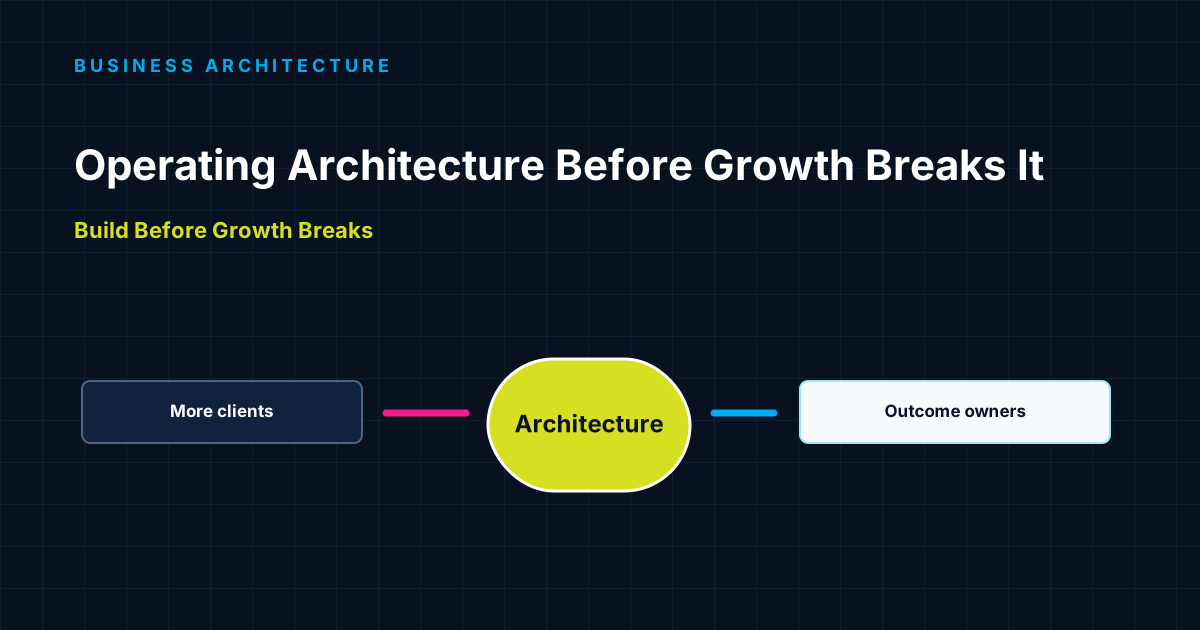
gives founders five observable measures for tracking whether decision, delivery, context, and coordination are truly moving into the business.
That kind of pressure usually persists because the business has treated the visible symptom as the problem. A new hire, another meeting, a document, or a reminder can help in the right context. None of them will create lasting relief if the underlying ownership, decision boundary, standard, or handoff is still unclear.
The better move is to make the pattern specific. What is repeatedly coming back? What outcome is at risk? Who should be able to move it? What information or authority are they missing? Those questions turn a broad frustration into an operating-design problem the business can actually address.
Why This Happens
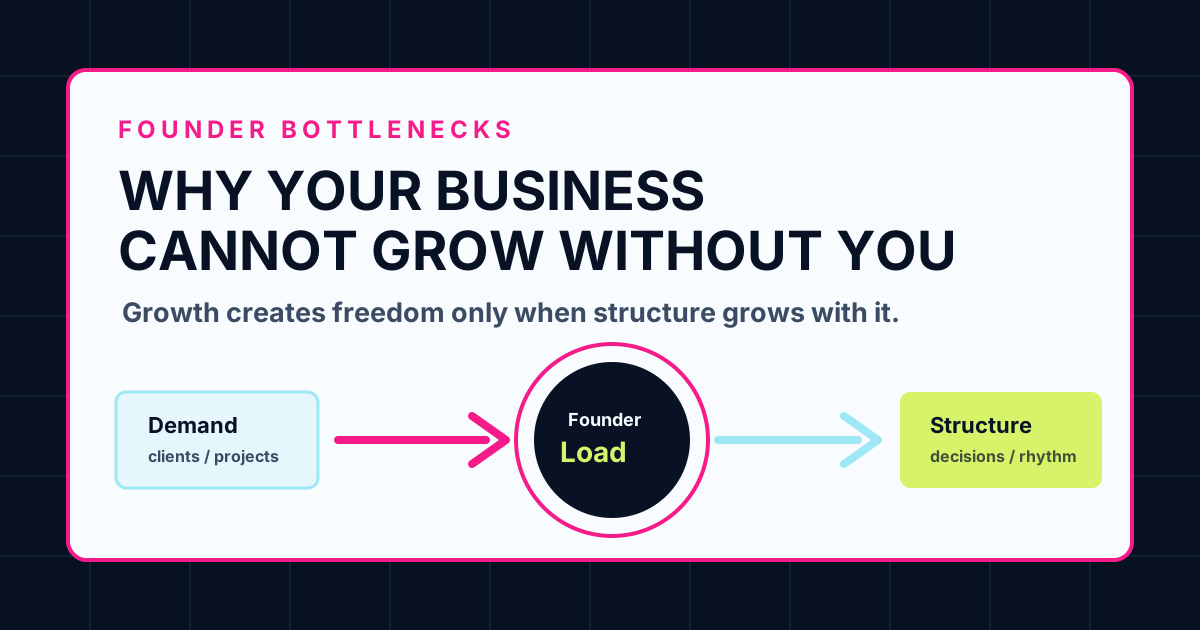
Founder-led businesses often grow by relying on quick judgment and close coordination. That creates speed early on, but it can also leave important rules implicit. People learn to ask the founder because asking is safer than guessing. The founder steps in because it feels faster than explaining the logic behind the decision.
Over time, that loop becomes normal. The team works hard, but ownership stays shallow. The founder remains busy, but the business does not gain the capacity to handle the same pattern independently.
The solution is not to remove the founder from work that genuinely needs founder judgment. It is to separate those decisions from the normal work that should be able to move through the operating system.
The PROGRESS Lens
Capture the specific evidence behind this operating issue before choosing a fix.
Identify the constraint that keeps the pattern active.
Define what better operating movement would look like in observable terms.
Choose the smallest next change that can test and improve the pattern.
Mini Case
Imagine a founder with steady demand and a capable team. A recurring issue appears every week: a client request, a priority conflict, a delivery exception, or a decision that crosses roles. Each instance looks small, so the founder resolves it quickly.
After tracking the pattern, the company sees that the same work keeps returning because no one has a clear outcome to own, the team does not have a usable decision rule, and the relevant context is scattered. The fix is not a bigger meeting. The team creates one clear owner, a simple decision boundary, a shared source of context, and a weekly review point for the exceptions that still need leadership attention.
The founder remains connected to the business, but no longer has to serve as the default route for normal work.
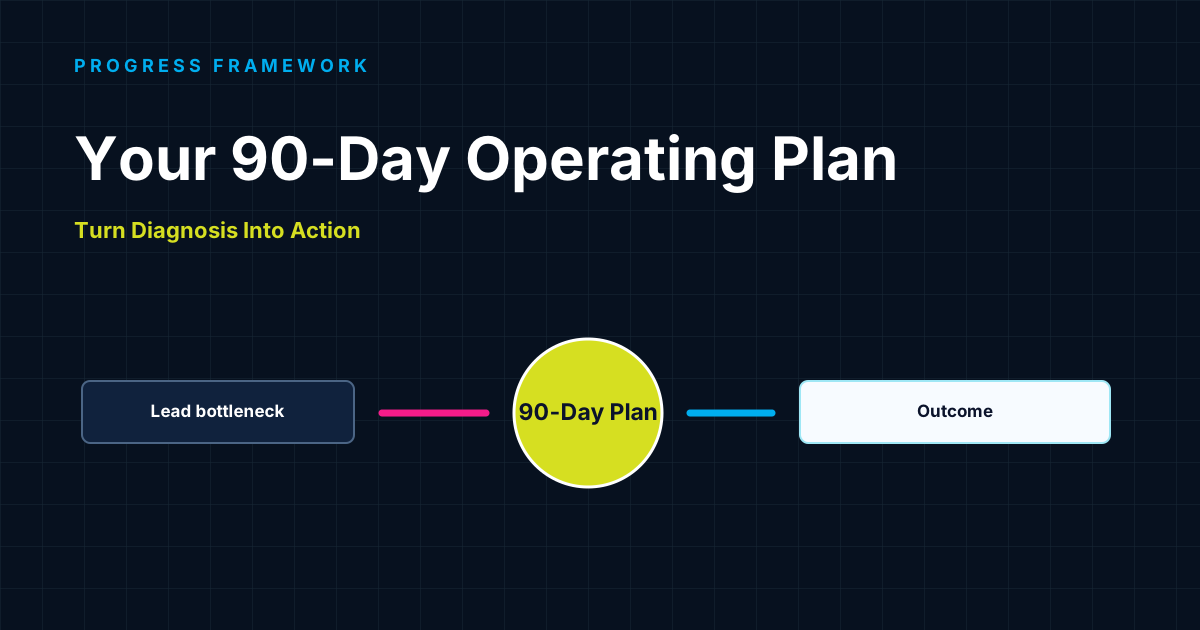
What To Do Next
Start with one recurring operating pattern, not a complete overhaul.
Capture the evidence
Track where this issue appears, who is affected, and what gets delayed, repeated, or escalated.
Define the outcome
Name the result the business needs to protect, such as client trust, delivery quality, speed, margin, or leadership capacity.
Find the missing layer
Decide whether the team needs clearer ownership, a decision rule, shared context, a usable standard, a handoff, or a review rhythm.
Install one change
Give the right owner the smallest structure that allows them to move without waiting for founder interpretation.
Review the result
Watch whether the same issue returns less often, moves faster, and produces better decisions over the next two to four weeks.
Common Mistakes
Avoid treating a recurring operating pattern as a one-time people problem.
Fixing the loudest instance
The urgent example may be a symptom rather than the design gap that keeps recreating it.
Adding more meetings first
A meeting can surface the issue, but it does not automatically create decision rights, ownership, or usable context.
Delegating without structure
People cannot fully own an outcome if the standard, authority, and escalation boundary are still hidden.
Documenting work nobody uses
Documentation only reduces dependency when it helps someone make a real decision or complete a real handoff.
Changing too much at once
A small, observable operating change creates better learning than a broad reorganization with no clear test.
Pulling work back too quickly
When the founder retakes every difficult decision, the business loses the chance to build judgment in the right owner.