Quick Answer
Business architecture is the operating structure that lets a company grow without everything routing through the founder.
For a founder-led company, business architecture means roles, workflows, decision rights, standards, scorecards, handoffs, operating rhythm, and accountability working together as one usable system.
If your business has tools, meetings, and people but still depends on your memory, judgment, approvals, or coordination, the issue is usually not a lack of effort. The business needs clearer operating architecture.
The Core Idea
Business architecture is the design of how the business actually works.
For a founder-led company, that means the structure underneath the visible work: who owns what, how decisions are made, where information lives, how quality is maintained, how priorities are reviewed, and how the team knows what to do next.
Most founders do not start with business architecture. They start with clients, delivery, sales, problem solving, and momentum. In the beginning, informal structure is fast because the founder can hold the operating map in their head.
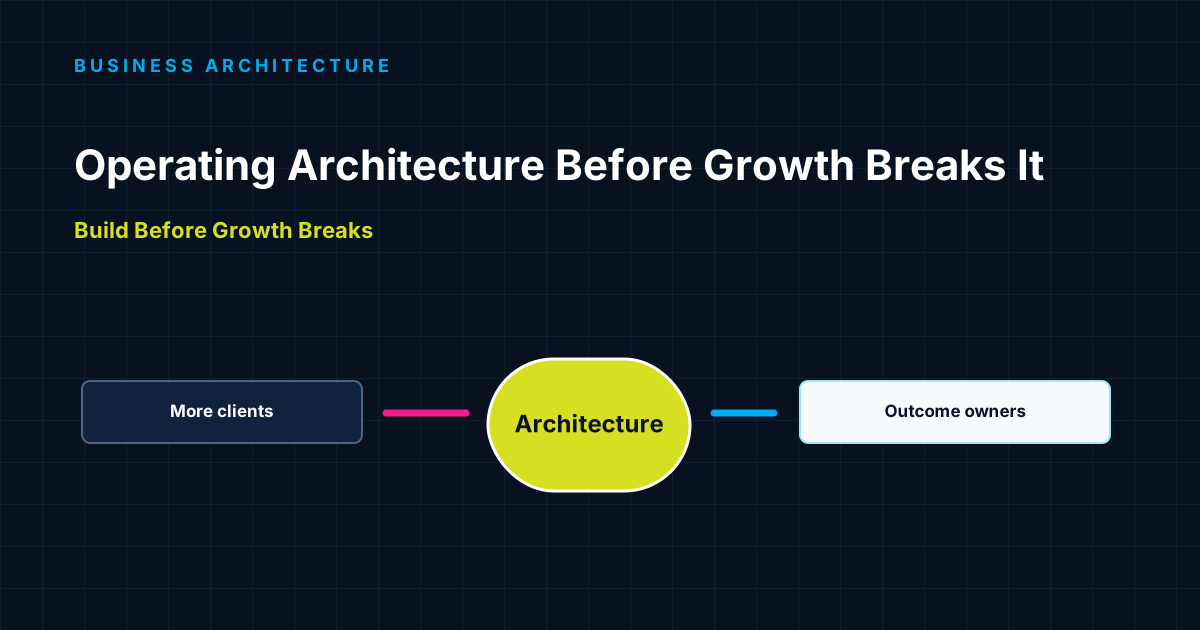
But growth changes the math. More clients create more exceptions. More team members create more handoffs. More tools create more places for context to scatter. The founder's memory, taste, and judgment become harder to scale.
Business architecture is what replaces founder dependence with operating structure. If the company still routes decisions, approvals, and quality checks through the founder, the architecture is not visible enough yet. That pattern is often the practical definition of a founder bottleneck.
For a founder-led company, business architecture does not mean adding corporate bureaucracy. It means designing enough structure for the team to know what they own, how decisions get made, what quality means, where context lives, and how work moves without constant founder intervention.
Think of business architecture as the layer that connects strategy to day-to-day execution. Strategy says where the company is going. Architecture defines how the work, decisions, people, standards, and rhythm need to operate so the company can actually get there.
That connection matters because many founder-led companies already have pieces of structure. They may have a project management tool, recurring meetings, a few SOPs, and defined roles. But if those pieces do not work together, the founder still becomes the glue. Architecture is what turns scattered pieces into a usable operating system.
Good architecture should be felt in ordinary work. The team should know where decisions live, what good looks like, when to escalate, and how progress is reviewed. When those answers are visible, the founder does not need to be the default source of clarity.
Why This Happens
Founder-led companies often grow through personal force before they grow through structure.
The founder closes the early deals, sets the standard, knows the clients, solves the exceptions, corrects the work, remembers the context, and pushes priorities forward.
That creates traction. But if those patterns never become visible, the business quietly depends on the founder as the operating system.
The team may have job titles, software, SOPs, and meetings, but still lack clear role ownership, defined decision rights, visible quality standards, useful scorecards, reliable meeting cadence, clean handoffs, and shared operating context.
This is where business architecture differs from generic process improvement. Process improvement often looks at one workflow. Business architecture looks at the connected operating system: roles, decisions, handoffs, standards, metrics, cadence, and leadership rhythm. The goal is not more process. The goal is a business that can carry more complexity with less founder drag.
The architecture usually matures in layers. First, the business needs clearer ownership. Then it needs decision rights so people know where they can act. Then it needs standards so quality does not depend on founder review. Then it needs rhythm, scorecards, and review habits so the system keeps improving without constant founder intervention.
This is why business architecture is especially useful before hiring a senior operator. A strong hire can help, but they need a structure to operate inside. Without that structure, the founder may simply add another person who still needs their context.
The PROGRESS Lens
Use PROGRESS to see which operating layer needs design first.
What is the current operating reality beneath the visible work?
Which missing structure is creating the most drag?
What does the business need to accomplish without more founder involvement?
What roles, systems, tools, or support are missing?
Where is the business fragile because structure is informal?
What operating layer should be designed first?
Mini Case
The problem may look like accountability, but the deeper issue is architecture.
A founder has a small team, steady revenue, and growing demand. On paper, the business looks organized. There are roles, tools, meetings, and documented processes.
In practice, the founder still answers most judgment calls. Client delivery still depends on founder review. Priorities shift through side conversations. Team members are active, but ownership is uneven.
The founder assumes the issue is accountability. The deeper issue is architecture. The team needs clearer decision rights, role outcomes, quality standards, and a weekly rhythm that makes priorities and blockers visible.
What To Do Next
Do not architect the whole business in one pass.
Map the work that still routes through the founder.
Look for decisions, approvals, quality checks, and client-sensitive details that still need your direct involvement.
Identify where ownership is unclear.
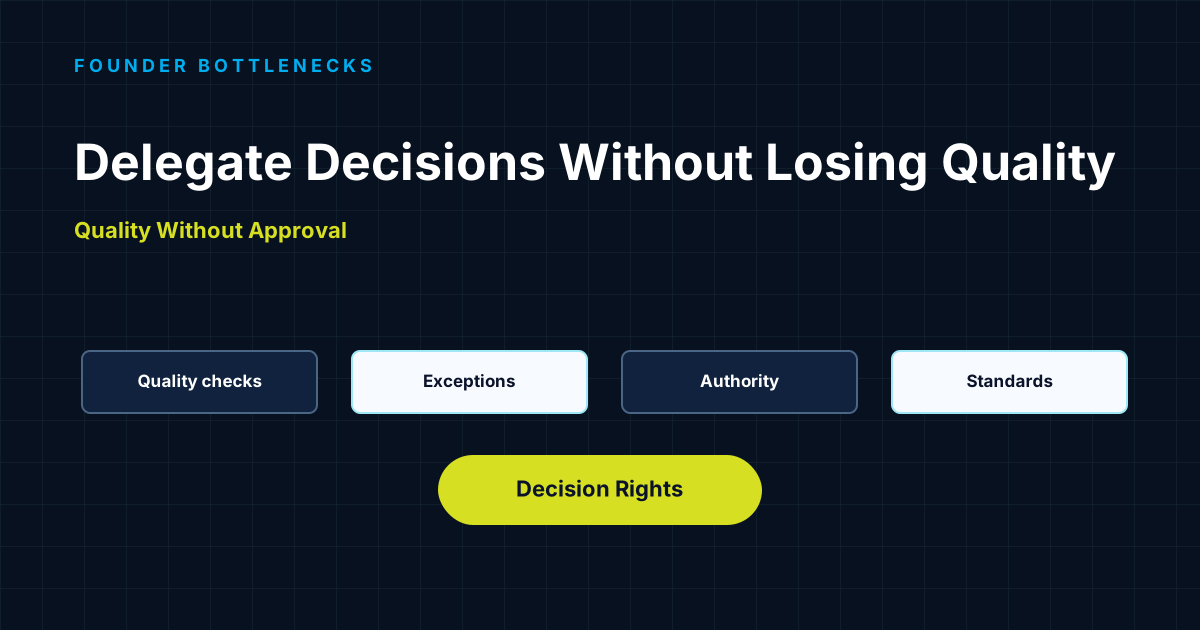
Separate tasks from true ownership: outcomes, authority, standards, and review rhythm.
Write down recurring decisions.
Define who owns them, who is consulted, and when the founder should be involved.
Make invisible standards visible.
Translate founder judgment into examples, criteria, scorecards, or review standards the team can use.
Review the operating cadence.
Meetings should create clarity, surface blockers, and drive next steps, not simply collect updates.
Choose one operating layer to redesign first.
Start with the part of the system creating the most drag.
If you are not sure which layer to redesign first, start with the Scale Readiness Diagnosis. If you already know the business depends too heavily on founder judgment, the Scaling Bottleneck Audit can turn that pattern into a practical roadmap.
The right first layer is usually the one creating the most downstream drag. If every project waits for founder approval, start with decision rights. If quality swings from client to client, start with standards. If meetings create discussion but not movement, start with operating cadence.
Common Mistakes
Business architecture should make the company lighter, not heavier.
Treating architecture like corporate bureaucracy
In a founder-led company, the best architecture is practical, visible, and useful to the team.
Adding tools before clarifying structure
Software cannot fix unclear ownership or decision rights. Tools should support the operating structure.
Confusing tasks with ownership
Ownership means understanding the outcome, decision authority, standard, and review rhythm.
Designing around the founder's current role
If the architecture assumes the founder stays involved in everything, the bottleneck remains built into the system.