Quick Answer
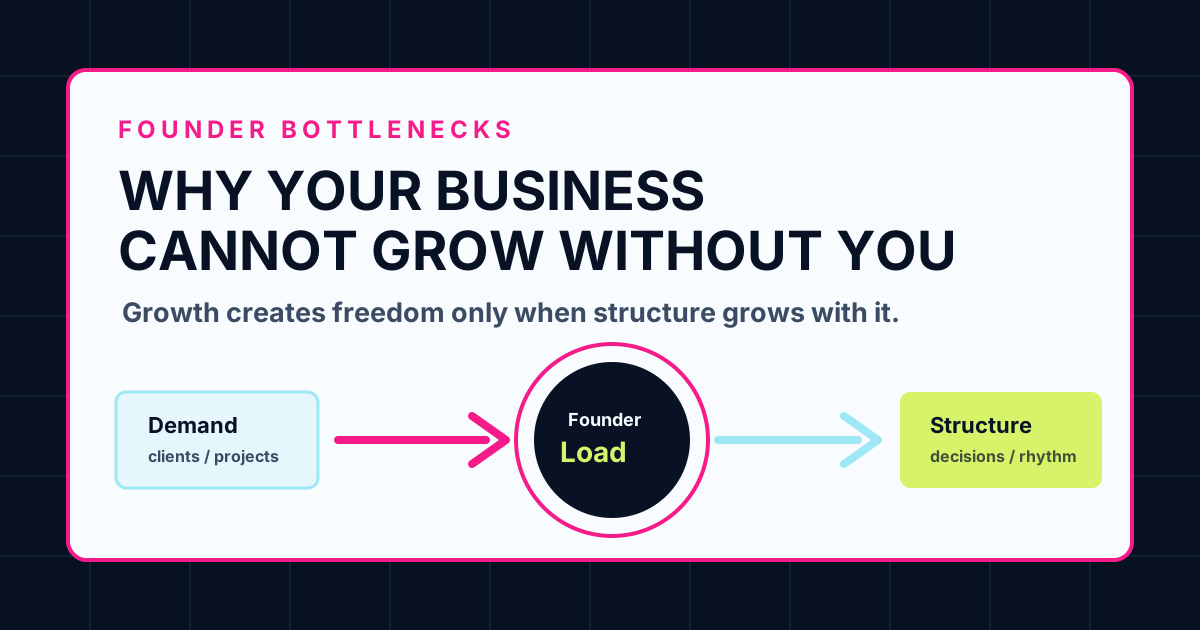
To stop being the bottleneck, stop making yourself the default route for unclear work.
A business owner bottleneck forms when decisions, approvals, quality checks, client context, or next steps still need the owner before normal work can move. The fix is not simply to delegate more tasks. It is to translate founder judgment into decision rights, standards, ownership, visibility, and operating rhythm.
Start with the recurring decisions and questions that still come back to you. Those repeated moments show where the business needs structure, not just more effort.
The Core Idea
You stop being the bottleneck by changing what the business needs from you.
You do not stop being the bottleneck by disappearing from the business.
In the early stage, the founder is the operating system. You know the clients. You remember the exceptions. You understand the standards. You can make tradeoffs quickly because the context lives in your head.
That is useful at first. But as the company grows, the same pattern becomes expensive. The team needs your approval. Clients expect your touch. Work slows down when your calendar fills up. Quality depends on your review. Decisions pile up because no one else has enough authority, context, or confidence to make the call.
The goal is not to remove the founder from anything important. The goal is to stop making the founder the default route for everything uncertain. If you want the plain-English definition first, start with What Is a Founder Bottleneck?.
Why This Happens
Founder bottlenecks are often created by success.
You built the first version of the business through speed, taste, urgency, and direct involvement. You could hold the whole map in your head because the map was small enough to carry.
Then the business worked. More clients arrived. More team members joined. More tools were added. More projects started moving at once. More decisions needed to be made without perfect information.
But the operating structure did not mature at the same pace. The founder's knowledge stayed private. Decision rights stayed fuzzy. Quality standards stayed implicit. Escalation rules stayed informal. Meetings became places to chase updates instead of create accountability.
So the team kept coming back. Not because they could not think. Because the system still required them to ask.
The business owner bottleneck is rarely fixed by pushing more work away. It is fixed by redesigning the way work, decisions, and accountability move.
The PROGRESS Lens
Use the framework to find the operating pattern underneath the drag.
Where is the business still routing work, decisions, approvals, or context through you?
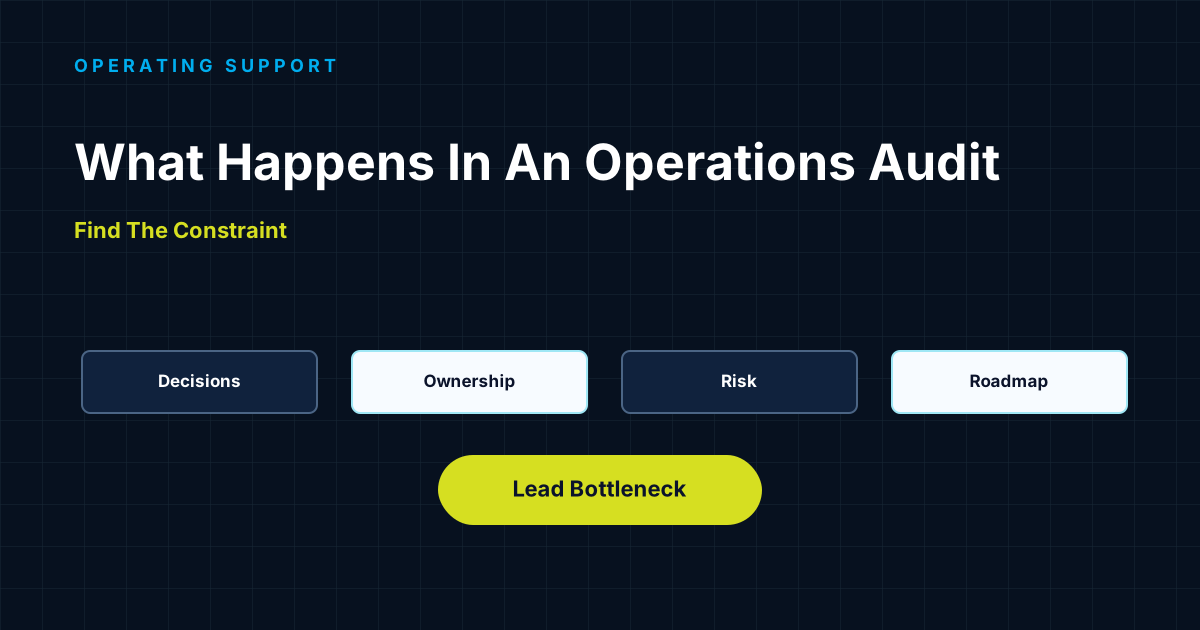
What is the lead constraint: unclear decision rights, missing standards, weak ownership, poor visibility, fragile handoffs, or lack of capacity?
What should the business be able to do without your daily involvement?
What people, tools, templates, dashboards, or operating hubs does the team need to move without chasing you?
Where is the business fragile because key knowledge, client judgment, or quality control still lives in your head?
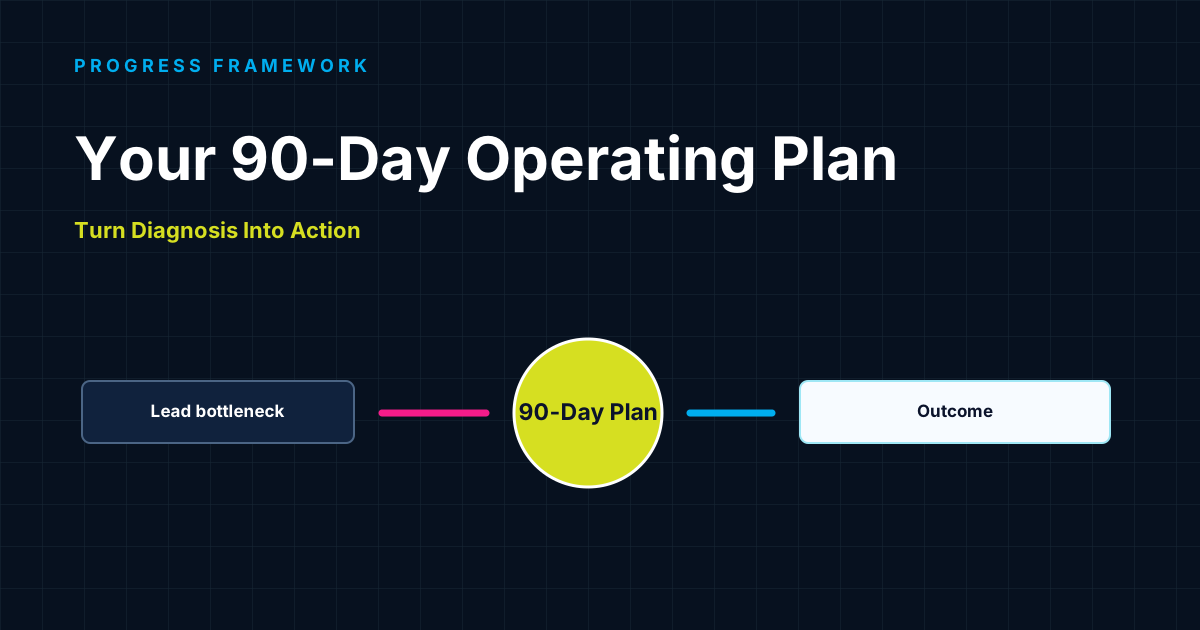
What is the first operating change that would reduce the most founder dependence?
Mini Case
The issue may not be task volume. It may be invisible operating structure.
Imagine a founder of a growing consulting firm. The team is capable. Clients are happy. Revenue is moving. From the outside, the company looks healthy.
Inside the business, the founder is still the final approval layer for proposals, client-sensitive decisions, delivery standards, hiring calls, and weekly priorities.
At first, the founder thinks the problem is delegation. So they hand off more tasks. But the work still comes back.
The real issue is an operational bottleneck in the business: no clear decision rights, no visible quality standards, no simple escalation rules, and no shared operating rhythm that tells the team what matters this week.
Once those pieces are clarified, the team does not need to ask about every routine decision. The founder is still involved in strategic calls, unusual risks, and high-value judgment moments, but the business no longer pauses every time something needs approval.
If the pattern is already clear and you need a practical roadmap, the Scaling Bottleneck Audit is the next step after diagnosis.
What To Do Next
Do not start with more tasks. Start with the decisions that still need you.
List the decisions that still come back to you.
Look for repeated pricing exceptions, client boundary calls, final quality checks, hiring decisions, weekly priorities, delivery tradeoffs, and "is this good enough?" questions.
Separate founder judgment from founder involvement.
Some decisions need your judgment because they are strategic, risky, or unusually sensitive. Others come to you only because your criteria have never been translated into something the team can use.
Define decision rights before adding more process.
For each recurring decision, define who owns it, who should be consulted, when the founder must be involved, and when the founder should not be involved.
Turn invisible standards into usable standards.
If quality depends on your taste, review, correction, or last-minute intervention, the team needs clearer examples, criteria, checklists, or client delivery standards.
Install an operating rhythm that reduces chasing.
Create a place to review priorities, progress, decisions, risks, and next steps before urgency turns every issue into a founder interruption.
Protect the founder's role.
You may still own vision, key relationships, strategic decisions, culture, and high-leverage judgment. But you should not remain the default approver, reminder system, quality filter, project manager, and emergency backup.
Common Mistakes
The wrong fix can make the bottleneck worse.
Delegating tasks before designing ownership
Task delegation can create temporary relief, but ownership requires outcomes, standards, decision rights, and clear escalation rules.
Hiring someone to absorb the bottleneck
A new hire can help only if the operating problem is clear. Otherwise they may become another person who needs your attention.
Writing SOPs for the wrong problem
SOPs help repeatable execution. They do not solve unclear authority, weak accountability, strategic ambiguity, or missing quality judgment.
Trying to fix everything at once
Founder bottlenecks usually have one lead constraint creating several symptoms. Fix the lead constraint before redesigning the whole business.
Blaming the team too early
Sometimes the team is not avoiding ownership. They are operating inside a structure where ownership is unsafe, unclear, or constantly overridden.