Quick Answer
Your business cannot run without you when critical context still lives in your head.
If your business cannot run without what you know, the problem is usually not that the team is careless. It is that the business has not turned founder memory into operating memory yet. Client context, quality standards, exceptions, history, and workflow shortcuts still return to the founder because they are not visible or trusted enough elsewhere.
The fix is not to document everything. Start with the repeated questions that interrupt you most often, then turn that context into a source of truth, handoff rule, checklist, example, or standard the team can actually use.
The Core Idea
Operational redundancy happens when the founder is still the source of truth.
Operational redundancy is not just duplicated work.
It is repeated dependence.
The same question comes back. The same explanation has to be given again. The same client context has to be remembered again. The same standard has to be clarified again. The same handoff has to be reconnected again.
The founder becomes the operating memory of the business.
That can feel efficient in the early stage because you can answer quickly. You know the history. You know the shortcut. You know why a certain client needs a different approach. You know which standard matters and which one can flex.
But the faster you answer, the more the business learns that you are the source of truth.
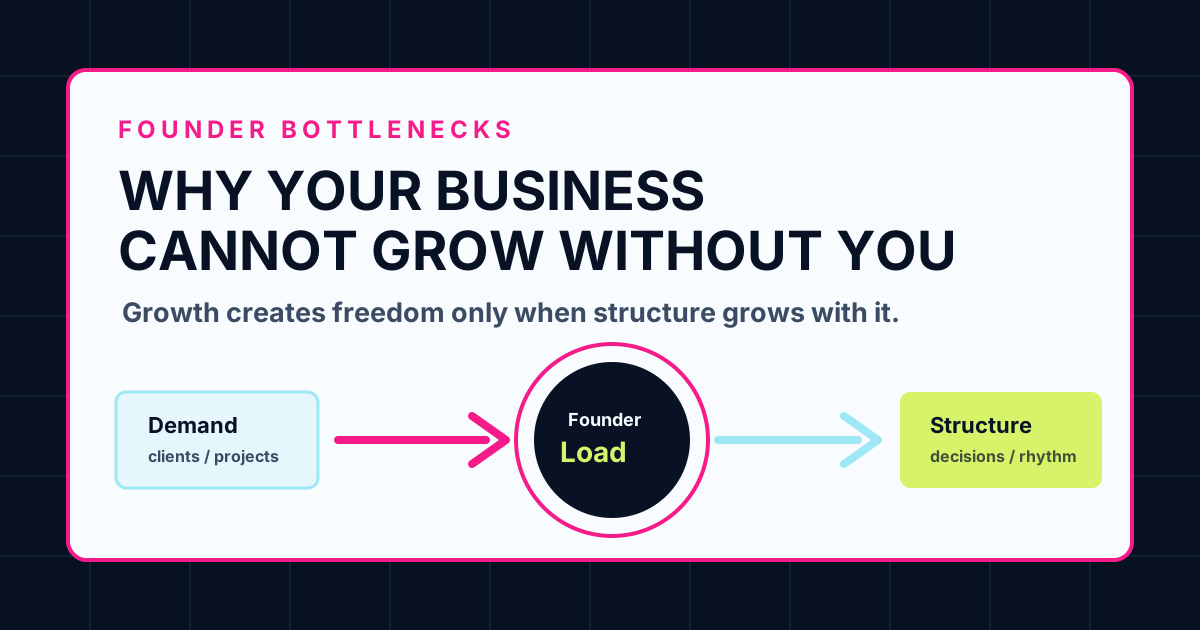
Over time, this creates a quiet bottleneck.
The team may be capable, but it still needs access to what you remember.
The fix is not to document everything. That usually creates clutter.
The fix is to identify the repeated context that keeps coming back to you and turn that into operating memory the team can actually use.
That is also why SOPs do not fix every founder bottleneck: a documented process cannot resolve every missing decision rule, ownership gap, or piece of client context.
Why This Happens
Founder knowledge grows faster than the system that stores it.
Most founders learn the business by living inside it.
You learn what clients care about because you have been on the calls. You learn delivery shortcuts because you fixed the work. You learn exceptions because you handled the consequences. You learn quality standards because you absorbed the feedback.
That knowledge becomes intuitive.
The problem is that intuition is hard to transfer unless it becomes visible.
When the business grows, new people join the work. More clients create more variations. More handoffs create more places for context to disappear. More tools create more places for information to scatter.
If the system does not mature, the founder becomes the place where scattered context gets reassembled.
That is why the same questions keep returning.
The business is not asking because it is lazy. It is asking because the operating memory is incomplete, hard to find, or not trusted.
What Operating Memory Actually Means
Operating memory is the part of the business that remembers without you.
Operating memory is not a giant handbook.
It is the set of useful places where the business stores context people need to act well.
That may include client context, workflow stages, quality standards, decision history, reusable checklists, role responsibilities, handoff expectations, and examples of good work.
Good operating memory has three qualities:
- It is easy to find.
- It is connected to the work.
- It is trusted enough that people use it before asking the founder.
If documentation exists but no one uses it, the founder is still the system.
If the project board tracks tasks but not context, the founder is still the system.
If standards are discussed in meetings but not visible at the point of work, the founder is still the system.
The goal is not to remove every question.
The goal is to stop repeat questions from depending on founder recall.
The PROGRESS Lens
Identify which repeated questions, reminders, and context requests still return to the founder.
Find whether the blocker is missing context, scattered tools, unclear standards, weak handoffs, or low trust in existing documentation.
Define what the team should be able to remember, find, or confirm without founder involvement.
Create the source-of-truth notes, standards, templates, checklists, or handoff tools the work actually needs.
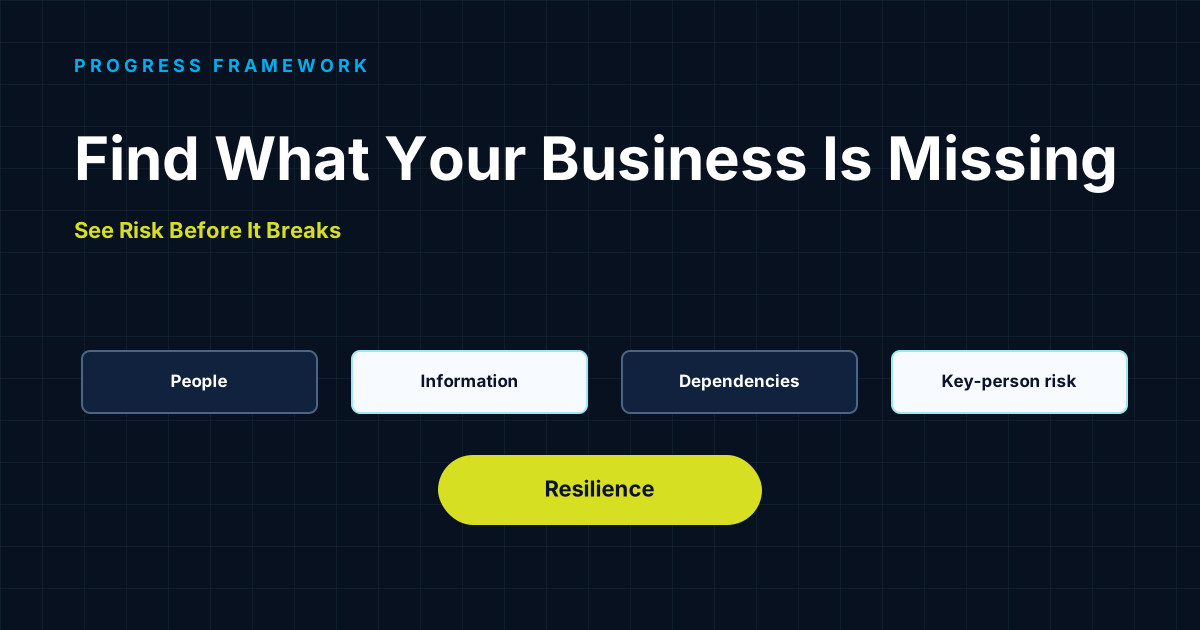
Name where the business is fragile because one person's memory carries important context.
Choose one recurring question and turn it into a usable piece of operating memory this week.
Mini Case
The founder thought the team needed better notes.
Imagine a founder-led service business where client delivery keeps returning to the founder.
The team asks about client preferences. They ask what was promised. They ask whether a certain standard applies. They ask where the latest example is.
The founder gets frustrated because the answers have already been explained.
So the company creates more documentation.
But the questions continue.
The issue is not the number of documents. The issue is that the useful context is not connected to the moment when the team needs it.
Client preferences are in one place. Project notes are in another. Quality examples live in old Slack threads. Decisions from last month are remembered by the founder but not visible to the delivery lead.
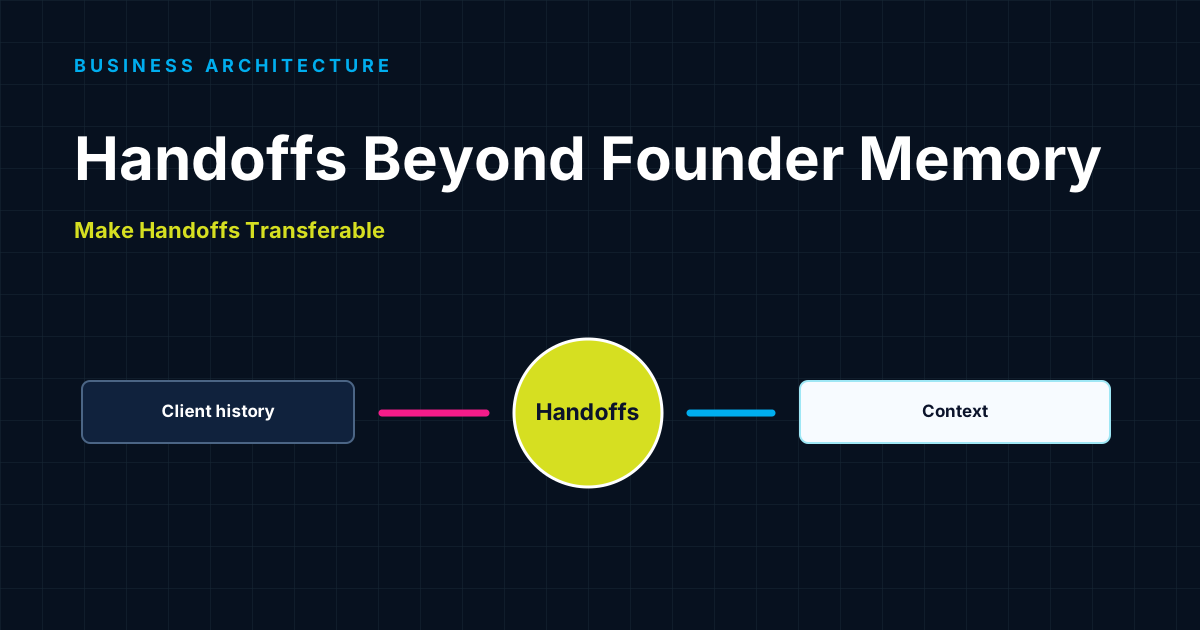
The fix is to create one client context page, one quality standard checklist, and one handoff ritual that updates the source of truth after each important decision.
The team stops asking the founder as often because the business finally has somewhere else to look.
If client work is where this dependence is strongest, use these six moves to make client delivery less dependent on you to turn shared context into a delivery structure the team can use.
What To Do Next
Start with the repeated question you are tired of answering.
Capture the repeat
Write down the questions, reminders, or explanations that came back to you this week.
Find the missing memory
Decide whether the issue is client context, quality standard, workflow step, decision history, or ownership.
Choose one source of truth
Put the answer where the team already works instead of creating another forgotten document.
Attach it to a workflow
Make the memory part of the handoff, review, meeting, checklist, or delivery process.
Review usage
If people still ask you first, make the source of truth easier to find or more useful.
Common Mistakes
Avoid creating documentation that does not change behavior.
Documenting everything
Too much documentation can make the useful context harder to find.
Hiding standards in meetings
If the standard only lives in conversation, the founder will keep restating it.
Creating a source of truth no one trusts
If the information is outdated, people will return to the founder.
Treating memory as a tool problem
Tools help, but only if the workflow and ownership are clear.
Expecting people to search harder
If the answer is hard to find, the founder becomes the faster option.
Forgetting decision history
Teams need to know not only what was decided, but why.