Quick Answer
Business growth creates chaos when volume grows faster than structure.
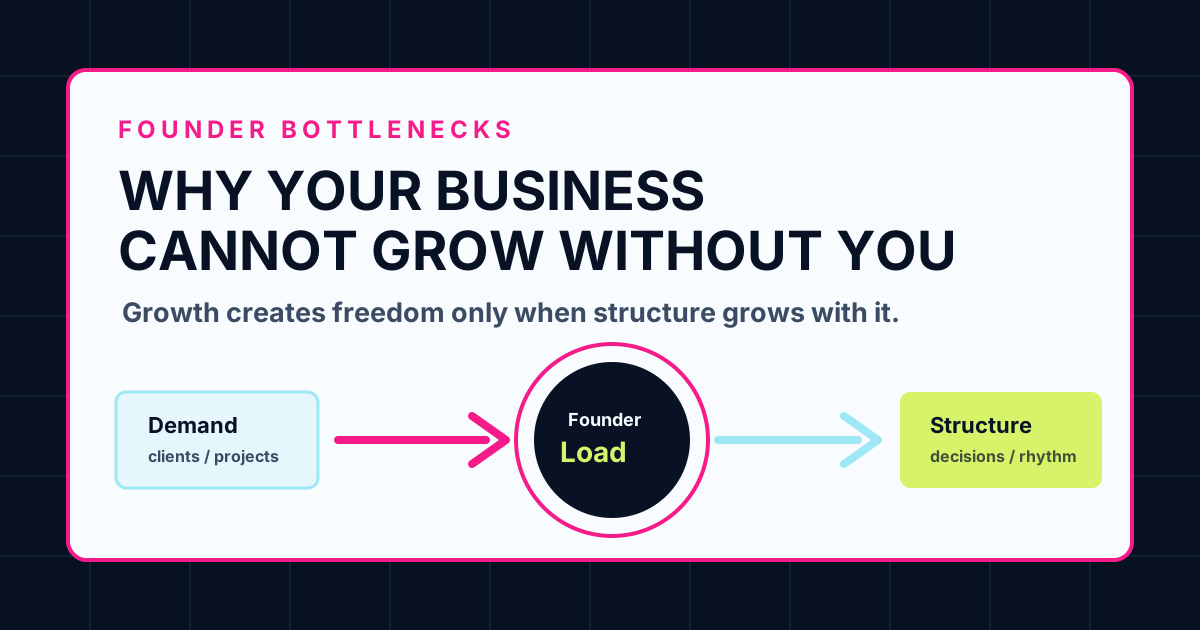
Growth feels heavier when more clients, projects, people, and opportunities create more handoffs, exceptions, meetings, and decisions than the current operating structure can absorb. The founder becomes the place where the added complexity gets resolved.
The fix is not simply to work harder or hire faster. The business needs roles, handoffs, visibility, decision rights, and operating rhythm that match the new level of complexity.
The Core Idea
Growth exposes the structure the business does not have yet.
Growth is often treated as proof that the business is working.
In one sense, it is.
More clients, more demand, more referrals, more revenue, and a larger team can all be signs of momentum.
But growth also increases complexity.
Every new client adds expectations. Every new team member adds handoffs. Every new offer adds decisions. Every new opportunity adds tradeoffs. Every new tool adds information paths. Every new project adds risk.
If the operating structure grows with the business, this complexity can become leverage.
If the operating structure stays the same, this complexity flows back to the founder.
That is Growth vs. Chaos.
The company is bigger, but the operating system is still built for a smaller version of the business.
The founder becomes the shock absorber.
Why This Happens
The business scales volume before it scales coordination.
Early growth often works because the founder can stay close.
You can remember client details. You can review quality. You can jump into delivery. You can make fast decisions. You can reconnect people when handoffs fail.
That closeness creates speed.
But growth changes the load.
What used to be one-off becomes frequent. What used to be manageable becomes recurring. What used to fit inside your attention now spills across more people, clients, tools, and timelines.
The business needs more than effort.
It needs scalable coordination.
That means roles, handoffs, decision rights, visibility, meeting rhythm, standards, and escalation rules that match the new level of complexity.
Without that structure, growth produces chaos.
What Scalable Structure Looks Like
Scale requires the business to absorb complexity without routing it all through the founder.
Scalable structure does not mean corporate bureaucracy.
It means the business has enough operating architecture to handle more volume without making the founder the center of every issue.
Useful structure includes:
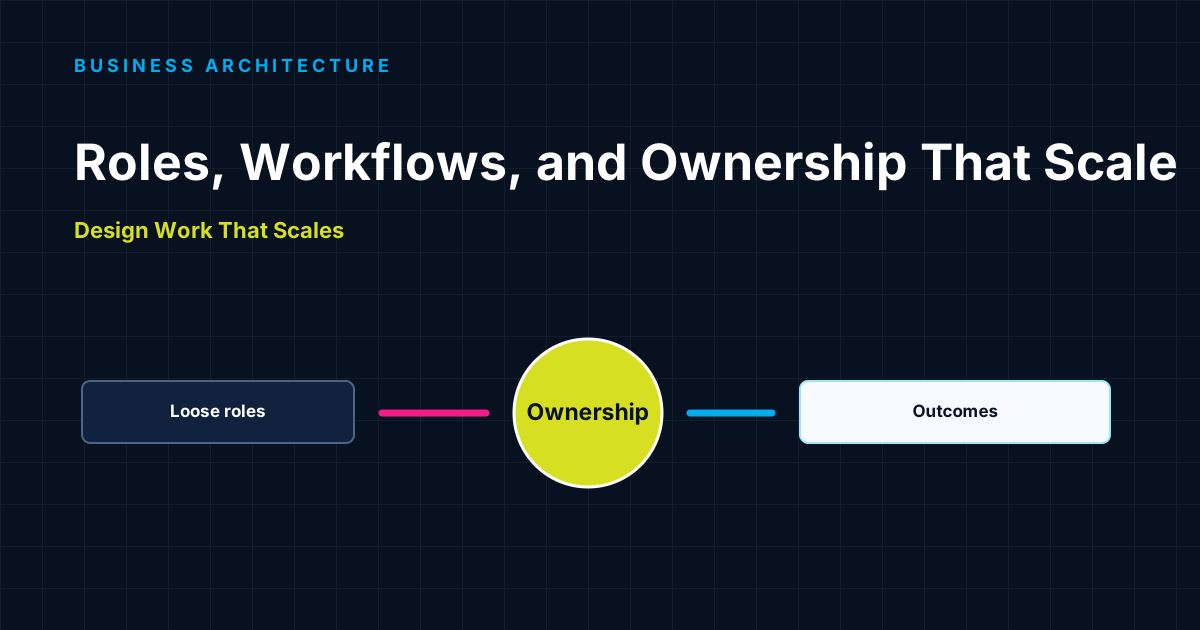
- Clear owners for major outcomes.
- Handoffs that preserve context.
- Decision rights that reduce approval queues.
- Review rhythms that surface risk early.
- Scoreboards that show movement without constant asking.
- Standards that protect quality as volume increases.
The point is not to slow the business down.
The point is to make growth less dependent on founder absorption.
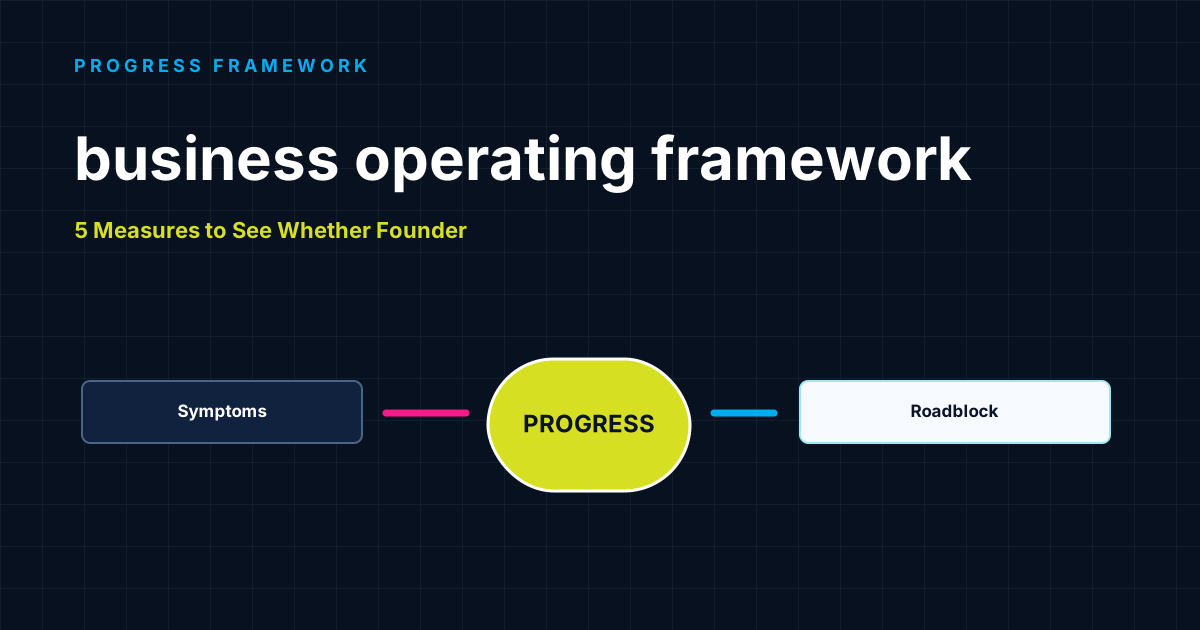
The PROGRESS Lens
Identify where growth is creating more coordination, exceptions, and founder involvement today.
Find the structure that did not mature with the business: roles, handoffs, decisions, standards, or cadence.
Define what the business should be able to handle at the next volume level.
Name the founder capacity, team confidence, and delivery stability that growth should create.
Surface where the current operating system breaks when volume increases.
Choose one growth pressure point and redesign the operating structure around it.
Mini Case
More clients made the business less stable.
Imagine a founder-led service business that wins several new clients in one quarter.
Revenue improves. The team is excited. The founder feels validated.
Then the pressure arrives.
Client onboarding becomes inconsistent. Delivery timelines get harder to manage. The founder spends more time answering internal questions. The team works hard, but everyone has a different sense of what matters most.
The founder thinks the issue is capacity.
But the deeper issue is that the business grew without redesigning the operating rhythm.
The team needed a clearer onboarding owner, a standard handoff, a weekly risk review, decision rights for client exceptions, and a dashboard that showed capacity before commitments were made.
Once those pieces were installed, growth stopped feeling like constant improvisation.
The business did not need to slow down. It needed to mature the structure beneath the speed.
What To Do Next
Find the place where growth is creating the most chaos.
Name the growth pressure
Identify whether the pressure is clients, team size, projects, offers, tools, or opportunities.
Map the repeated chaos
List the exceptions, meetings, decisions, delays, and quality issues that increased with growth.
Find the missing structure
Decide whether the issue is ownership, handoffs, cadence, standards, or visibility.
Redesign one operating layer
Install the structure that would let the business absorb more volume.
Review before adding more
Test whether the system can handle current volume before pushing for the next level.
Common Mistakes
Avoid treating growth pressure as a personal productivity problem.
Adding volume before adding structure
More clients or projects can expose weak handoffs quickly.
Hiring without redesigning cadence
More people can create more meetings if ownership is unclear.
Calling chaos a season
Some chaos is temporary, but recurring chaos is a system signal.
Chasing every opportunity
Growth without filters can overload the operating system.
Ignoring capacity signals
The business needs visibility before commitments create delivery pressure.
Assuming revenue equals readiness
More revenue does not always mean the company is structurally ready for scale.