Quick Answer
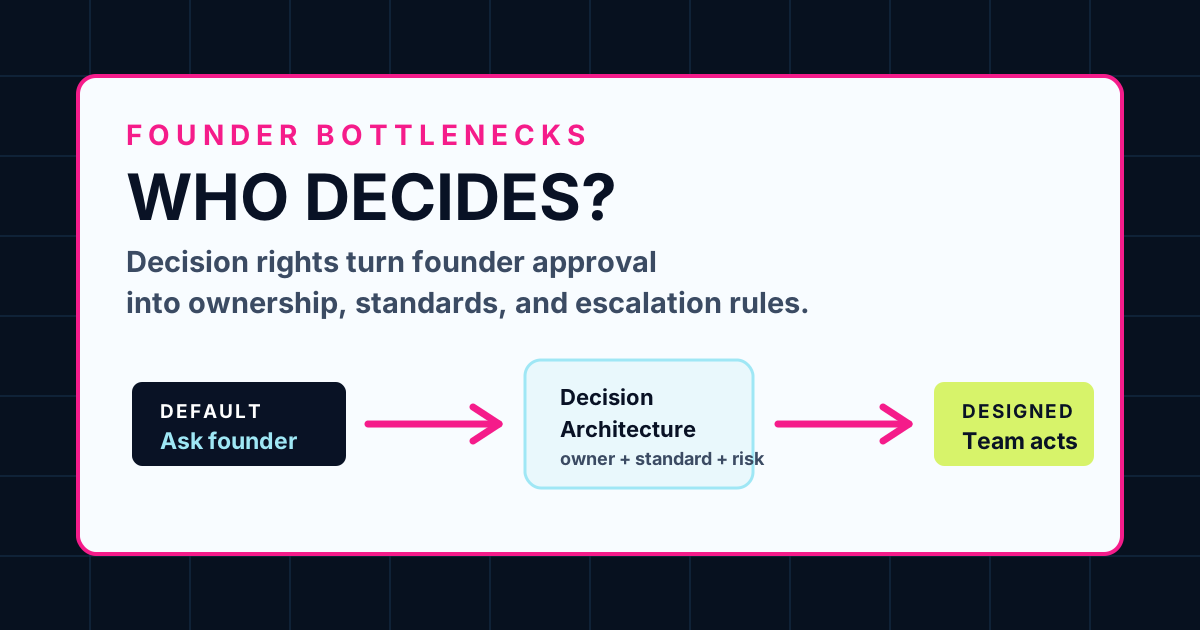
To delegate decisions without losing quality, define where the team can decide, what standard they must protect, and when they should escalate.
If the team still waits for you, the issue is usually not confidence alone. They may not know what authority they have, what quality bar to use, which risks are acceptable, or which exceptions need your attention. Delegation works when decision rights and standards become explicit.
The Core Idea
Decision delegation is a structure problem, not just a trust problem.
Founders often try to delegate decisions by saying, "You can decide this."
That sounds empowering.
But if the person does not know the standard, the risk boundary, the client context, or the tradeoff rule, they may still come back to the founder.
Not because they are passive.
Because the decision still feels unsafe.
This is the difference between assigning authority and designing authority.
Assigned authority says, "You own this."
Designed authority says:
- Here is the outcome you own.
- Here is the quality standard.
- Here are the decisions you can make.
- Here are the risks you should watch.
- Here is when to escalate.
- Here is how we will review and improve the decision pattern.
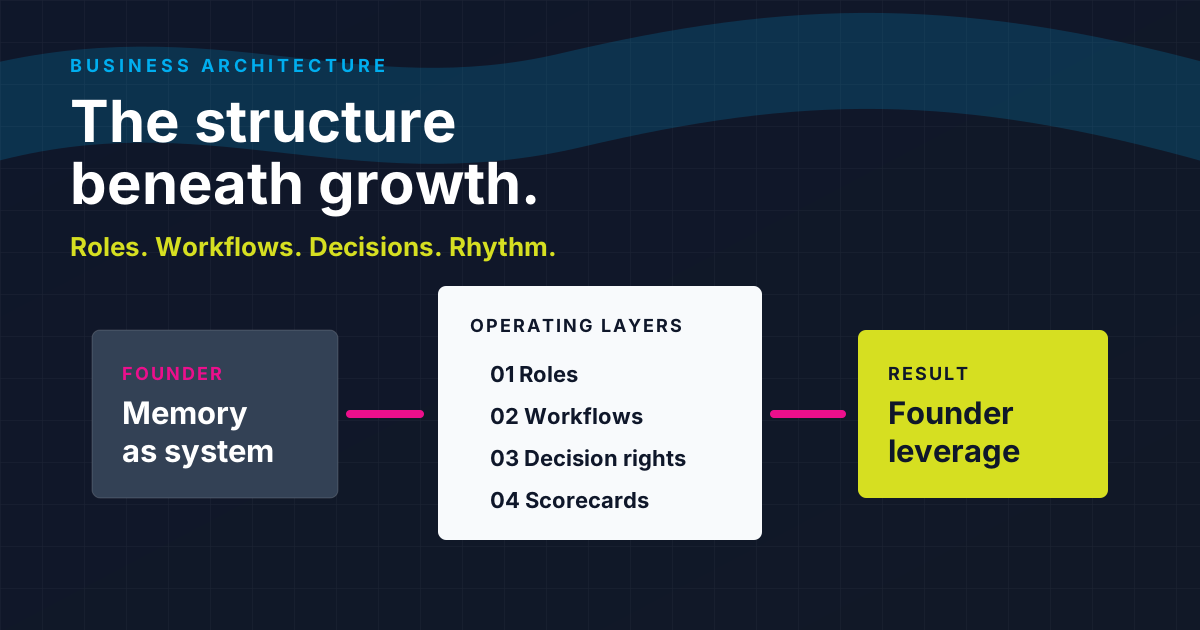
That is how decisions move out of the founder's head and into the operating system.
The founder does not need to approve everything.
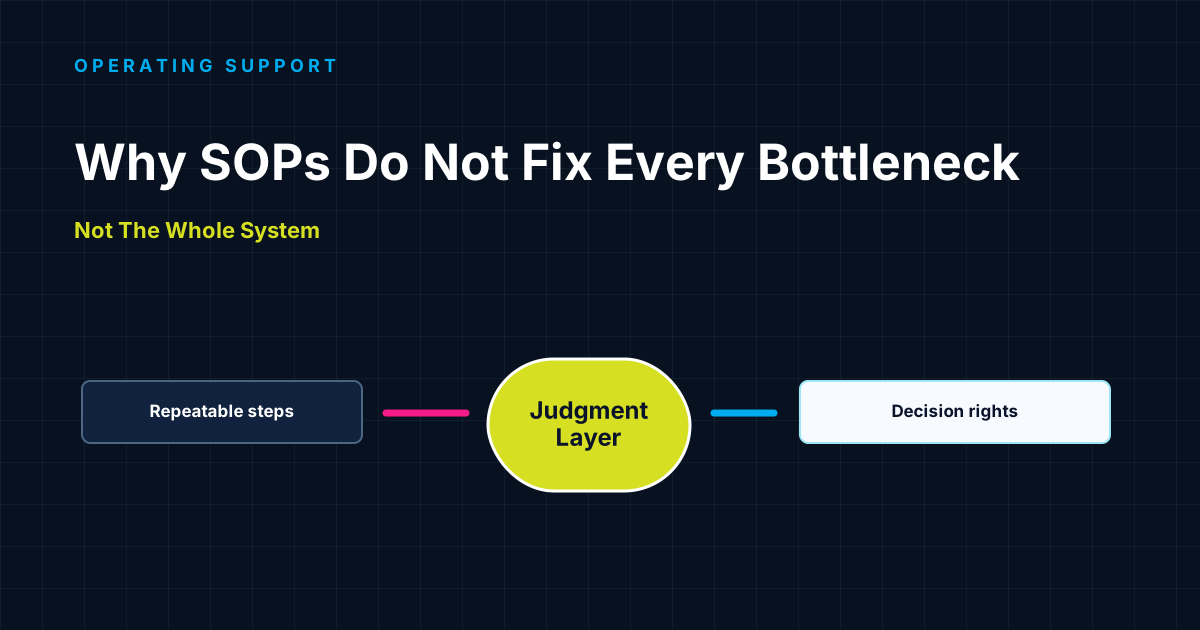
The founder needs to make judgment transferable enough that the team can protect quality without waiting.
Why This Happens
The founder often carries the invisible quality filter.
Quality is not always written down.
It often lives in the founder's eye.
You know when a client response is too vague. You know when a proposal is too generous. You know when a delivery choice protects the brand. You know when an exception is worth making and when it creates future drag.
The team may not see those patterns yet.
So they ask.
At first, that asking is useful. It helps them learn.
But if the answers never become standards, examples, thresholds, or escalation rules, the founder remains the quality filter.
The business gets stuck in approval dependence.
Every decision that touches quality returns to the founder because the operating structure does not yet carry the founder's judgment.
What To Define Before Delegating More
The team needs a decision lane, not a vague permission slip.
Before you ask the team to decide more, define the decision lane.
A useful decision lane includes:
- Decision type: What kind of decision is this?
- Owner: Who should make it?
- Standard: What does a good decision protect?
- Boundary: What is allowed without approval?
- Risk threshold: What makes the decision sensitive?
- Escalation rule: When should the founder be involved?
- Review rhythm: How will the team learn from real decisions?
For example, a client-success lead may be allowed to approve small service adjustments under a certain scope, as long as the adjustment protects client trust, does not create custom delivery debt, and is reviewed weekly for patterns.
That is more useful than "just handle it."
The decision becomes delegated because the judgment around it is visible.
The PROGRESS Lens
Identify which decisions still return to the founder before work can move.
Find whether the blocker is authority, standard, risk, context, confidence, or escalation.
Define what the team should be able to decide without lowering quality.
Name the human return: fewer interruptions, faster movement, and more confident ownership.
Create the decision lane, quality examples, escalation rules, and review rhythm.
Surface where quality or client trust could suffer if the decision is delegated too loosely.
Connect better decision rights to the founder's next role and the business's ability to scale.
Choose one recurring decision and turn it into a clear decision lane.
Mini Case
The founder was approving decisions the team could own with clearer boundaries.
Imagine a founder whose team keeps asking about client exceptions.
The founder wants the client-success lead to decide, but every exception feels slightly different.
Should they give a discount? Extend a deadline? Add an extra deliverable? Push back?
The founder keeps approving because quality and client trust matter.
After mapping the pattern, the founder realizes the team does not need more motivation. They need clearer decision rights.
Together, they create three lanes.
The client-success lead can decide small timing adjustments. They can decide minor scope swaps if effort stays equal. They must escalate discounts, custom deliverables, and exceptions that create future precedent.
They also create three examples of good decisions and review exceptions every Friday.
The founder still sees the pattern, but no longer approves every routine call.
Quality improves because the team understands the judgment, not just the task.
What To Do Next
Turn one recurring approval into a decision lane.
Pick one decision
Choose a decision that returns to you often but should not require you every time.
Name the owner
Decide who should make the decision in normal conditions.
Define the standard
Write what the decision must protect, such as quality, margin, speed, trust, or repeatability.
Set the boundary
Clarify what can be decided without you and what cannot.
Create escalation rules
Name the conditions that should still come back to you.
Review examples
Look at real decisions weekly until the standard becomes easier to apply.
Common Mistakes
Avoid delegating decisions without transferring judgment.
Giving vague permission
"Use your judgment" only works when the judgment is visible enough to use.
Delegating the task but keeping the standard in your head
The team can act only as far as the quality bar is clear.
Treating escalation as failure
Escalation is useful when the boundary is clear and exceptions teach the system.
Reviewing only mistakes
Review good decisions too so people can see what quality looks like.
Moving too many decisions at once
Start with one recurring approval pattern and make it work.
Confusing speed with autonomy
Fast decisions are useful only if they protect the right standard.