Quick Answer
Choose a coach, consultant, fractional COO, or operating partner based on the bottleneck you need to solve.
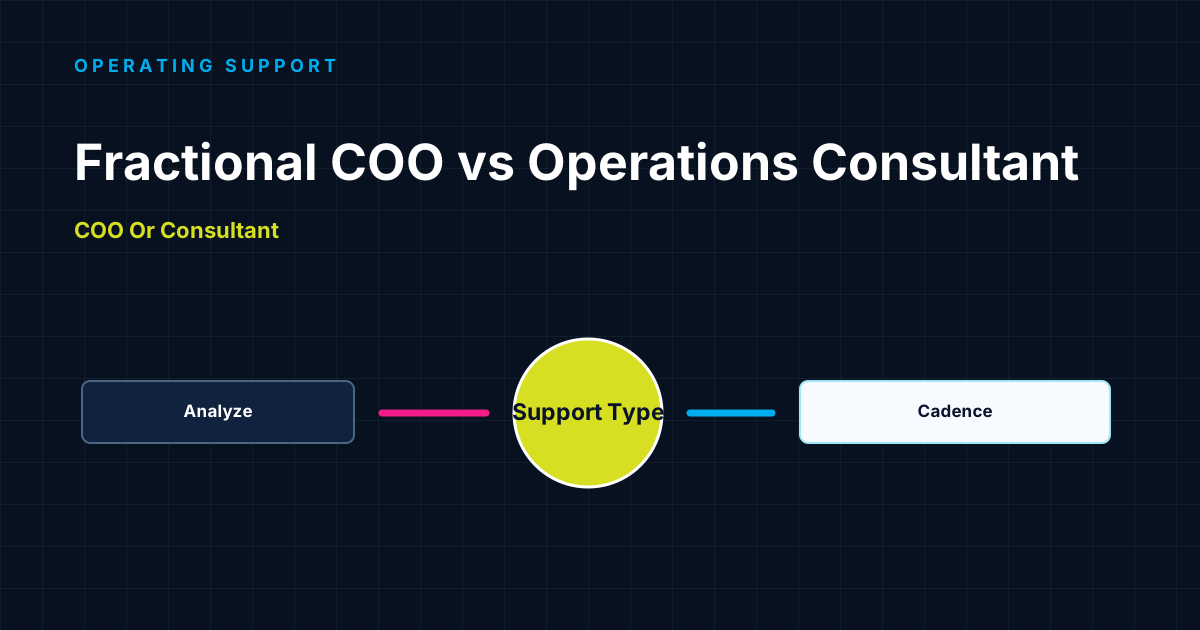
A coach helps the founder think and lead. A consultant diagnoses or recommends. Implementation support installs a known fix. A fractional COO provides ongoing senior operating support. An operating partner helps carry execution and rhythm over time.
If the real issue is founder dependence, unclear decision rights, weak ownership, or missing operating rhythm, choose support that reduces the dependency instead of adding more advice for the founder to manage.
The Core Idea
Different forms of support solve different problems.
A coach may help you think more clearly, lead more intentionally, or stay accountable to goals. A consultant may analyze a problem and recommend a solution. Implementation support may help turn a known fix into a working operating asset.
Fractional COO advisory may provide ongoing senior operating guidance without hiring a full-time COO. An operating partner may help carry execution, accountability, and leadership rhythm over time.
The mistake is choosing the support type before identifying the bottleneck. If the real issue is unclear decision rights, a coach may help you reflect on delegation, but the team still needs authority rules. If the real issue is scattered client delivery, a consultant may recommend process, but the business may need hands-on implementation.
Diagnosis first. Support second. If you are comparing a business coach vs consultant, or a fractional COO vs consultant, the practical question is not which category sounds best. The better question is: what kind of constraint is actually slowing the business down?
Use Scale Readiness Diagnosis when the bottleneck is unclear. Use the Scaling Bottleneck Audit when the pattern is clear enough to turn into a 90-day roadmap. Use PROGRESS Implementation Sprint when the fix needs to be installed. Use Fractional COO Advisory when the business needs ongoing senior operating rhythm after the first bottleneck is visible.
A simple way to choose is to look at what kind of help would make the symptom stop recurring. If the founder needs clearer thinking, perspective, or accountability, coaching may be enough. If the business needs analysis and recommendations, consulting may fit. If the fix is known but not installed, implementation support is usually more useful than more advice. If the company needs ongoing operating leadership but is not ready for a full-time executive, fractional COO advisory may be the right next layer.
The heavier the support, the more important the diagnosis becomes. A long advisory relationship can be powerful when the operating constraint is clear. It can also become expensive noise if the business has not yet named whether the issue is ownership, decision rights, operating rhythm, capacity, standards, or founder dependence.
For most founder-led companies, the best support choice is the one that reduces repeat dependence on the founder. If the support creates more meetings but no clearer ownership, it is probably not solving the real operating problem or creating the operating leverage the founder needs.
Why This Happens
Founders often look for help when symptoms become loud.
The team keeps waiting. Quality depends on founder review. Meetings do not create accountability. Clients escalate. The founder is tired of being the person who holds everything together.
At that moment, any help can sound useful. But the wrong support can create more noise. Motivation will not fix missing decision rights. Strategy will not fix weak handoffs. Advice will not install an operating rhythm.
The support should match the constraint. A founder bottleneck may need structure before encouragement. An operational bottleneck may need implementation before more strategy. A leadership rhythm problem may need advisory support after the operating map is clear.
This is why a founder-led company should avoid buying support based only on urgency. The same symptom, such as the founder being overloaded, can point to very different root causes: missing ownership, unclear authority, weak cadence, scattered context, or a true leadership capacity gap.
The goal is not to avoid support. The goal is to buy the right support at the right time. Good support should reduce founder dependence, not become another person the founder has to manage, explain, or chase.
The PROGRESS Lens
Use diagnosis to choose the right support type.
What is happening in the business right now?
What constraint is creating the most operating drag?
What outcome should support help create?
What support is actually missing?
What risk grows if the founder chooses the wrong support?
What is the next best move: coaching, consulting, implementation, advisory, or operating partnership?
Mini Case
The support sequence matters.
A founder considers hiring a fractional COO because they are tired of daily operations. The founder is overloaded, the team needs more structure, and decisions keep coming back.
After diagnosis, the lead bottleneck is not a missing executive. It is unclear decision rights and lack of operating rhythm.
Instead of jumping into a long advisory relationship, the founder starts with a focused audit and implementation sprint. The business clarifies ownership, installs a weekly cadence, and creates a decision map. After that, the founder can decide whether ongoing fractional COO advisory is still needed.
What To Do Next
Choose the lightest support that can solve the real constraint.
Name the symptom.
Write down the issue you are trying to solve before looking for the provider category.
Identify the problem type.
Ask whether the issue is thinking, strategy, implementation, accountability, or operating leadership.
Define what must change.
Name what would need to change inside the business for the symptom to stop recurring.
Pick the support that matches the constraint.
Support should create clarity, structure, and movement. It should not become another dependency.
Avoid long-term support too early.
Wait until the lead bottleneck is clear before committing to heavier support.
Sequence support from light to heavy.
Start with diagnosis when the constraint is unclear, audit when you need a roadmap, implementation when the fix is known, and advisory when the business needs an ongoing operating rhythm.
Common Mistakes
The wrong support can make the operating problem harder to see.
Hiring support before diagnosing the bottleneck
If the operating constraint is unclear, it is easy to buy the wrong kind of help.
Using coaching to solve a structure problem
Coaching can help the founder grow, but founder dependence often requires decision rights, standards, workflows, and rhythm.
Expecting consulting recommendations to install themselves
A roadmap is useful only if the business has the capacity and ownership to implement it.
Hiring a fractional COO too early
Fractional COO support works best when the business has enough complexity and commitment to act on operating guidance.
Looking for a person to replace structure
People help, but they cannot carry unclear ownership, scattered context, and invisible standards forever.