Quick Answer
The first bottleneck to fix is usually the one that repeatedly slows work, creates founder intervention, exposes the business to risk, and makes other improvements less effective until it changes.
The Core Idea
A bottleneck is a leverage point, not a complete explanation of the business.
The right first bottleneck is the one that changes the system's ability to move. It may be unclear decision rights, missing ownership, hidden operating memory, overloaded capacity, weak priorities, or a workflow that has no reliable handoff. The aim is to choose the lead domino, not to create a perfect diagnosis before acting.
Why This Happens
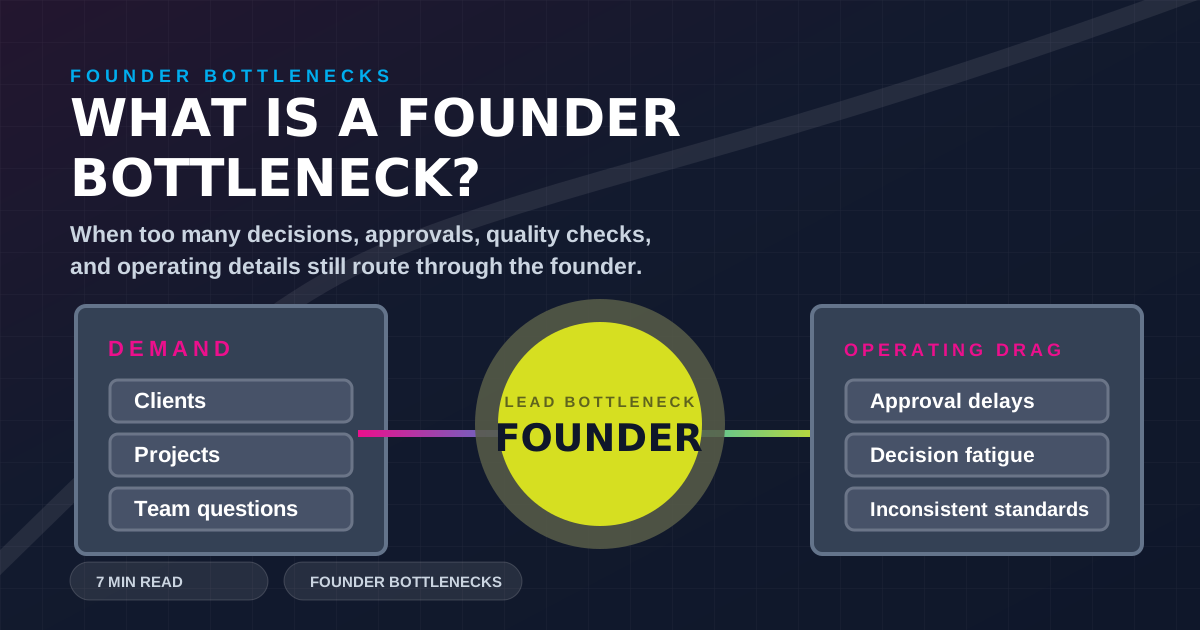
Founders experience a system as a list of interruptions.
The business presents problems one at a time: a client issue, a missed deadline, a hiring need, a team question. Without a shared operating picture, the founder reacts to each one separately. Pattern recognition turns the list of interruptions into a decision about what to fix first.
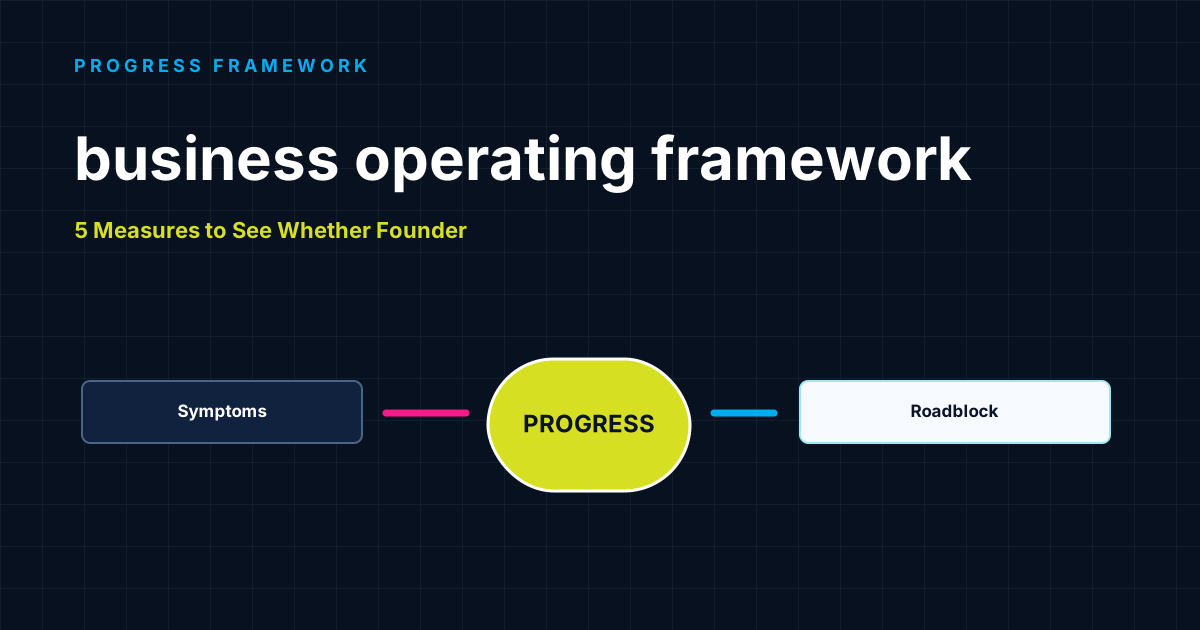
The PROGRESS Lens
Capture the recurring symptoms without assuming their cause.
Look for the constraint that sits beneath several symptoms.
Define what should move differently if the constraint is addressed.
Name the measurable and human return from resolving it.
Identify what capability, information, time, or support is needed.
Assess the risk of delaying action or choosing the wrong problem.
Connect the priority to the founder's larger business goal.
Turn the chosen bottleneck into a short, owned action sequence.
Mini Case
The founder stopped treating every late project as a capacity issue.
A company had late projects, stressed staff, and constant founder follow-up. It appeared to need more people. The diagnostic questions showed that work entered delivery without a clear owner or a complete handoff. The first fix was an intake and ownership rule. Capacity planning became more accurate only after that roadblock was addressed.
What To Do Next
Use seven questions to choose the lead constraint.
What repeats? Which delay, decision, question, or exception keeps returning?
Where does work wait? Identify the point where normal work most often stalls.
What comes back to the founder? Founder involvement is often a useful signal of missing structure.
Which problem affects several outcomes? Look for the constraint touching quality, speed, client experience, margin, or team ownership.
What has already been tried? Repeated failed fixes can reveal that the visible symptom is not the lead issue.
What risk grows if this stays unchanged? Prioritize exposures that can damage trust, cash, quality, or leadership capacity.
What small change would create the most movement? Choose the next testable operating move, not an entire transformation program.
Common Mistakes
Avoid choosing the loudest symptom by default.
Fixing the newest crisis
Recency does not always indicate leverage.
Starting with a preferred solution
A hire or tool may be useful, but only after the constraint is clear.
Prioritizing what is easiest
Easy work can create activity without changing the system.
Confusing a person with the bottleneck
Look for the conditions and structure around the work.
Trying to fix everything
A long backlog hides the next meaningful move.
Skipping risk
The right priority balances improvement opportunity with exposure.