Quick Answer
Make client delivery less dependent on you by assigning an end-to-end delivery owner, centralizing client context, defining quality and exception rules, and reviewing delivery risk on a predictable rhythm.
The Core Idea
A founder-led client relationship is not the same as a founder-dependent delivery system.
Clients may value access to the founder. That can remain true.
The problem starts when routine delivery needs the founder to interpret every promise, connect every piece of context, approve every exception, and protect every quality standard. That makes growth expensive in founder attention.
The operating question is simple: what must the team know, decide, and review to give the client a consistent experience without waiting for the founder?
Why This Happens
Client knowledge accumulates informally before it becomes a delivery asset.
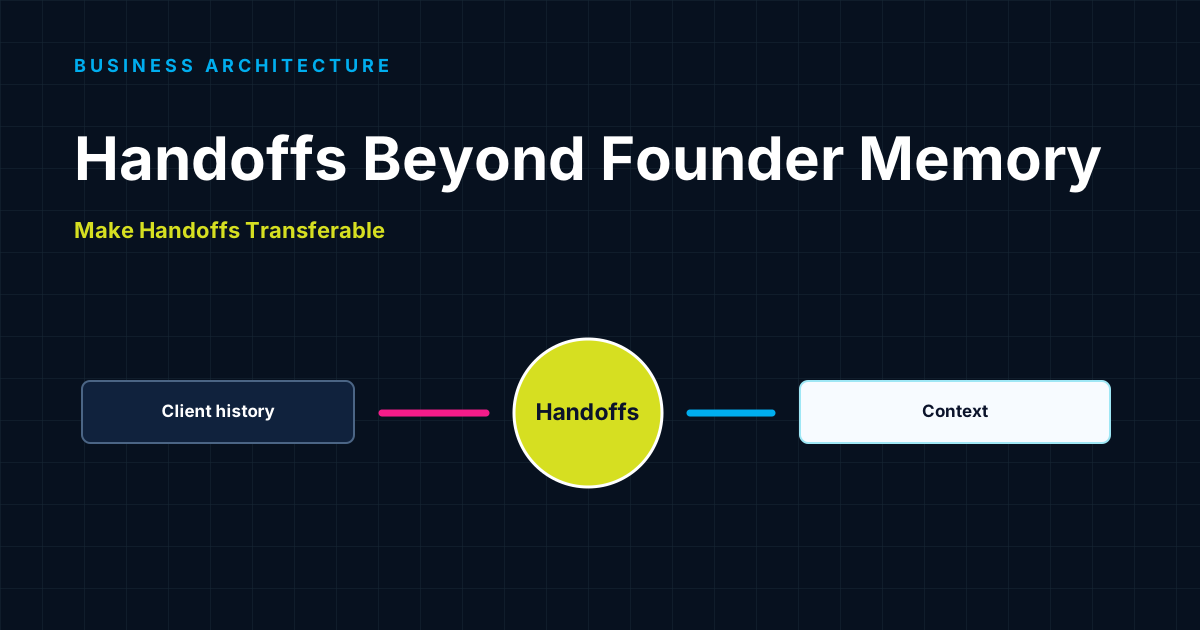
In early-stage client work, it is efficient for the founder to hold the history. As the company adds clients and team members, informal knowledge becomes a hidden dependency. The team does not lack care. It lacks a shared picture of the client, the delivery standard, and the boundaries for exceptions.
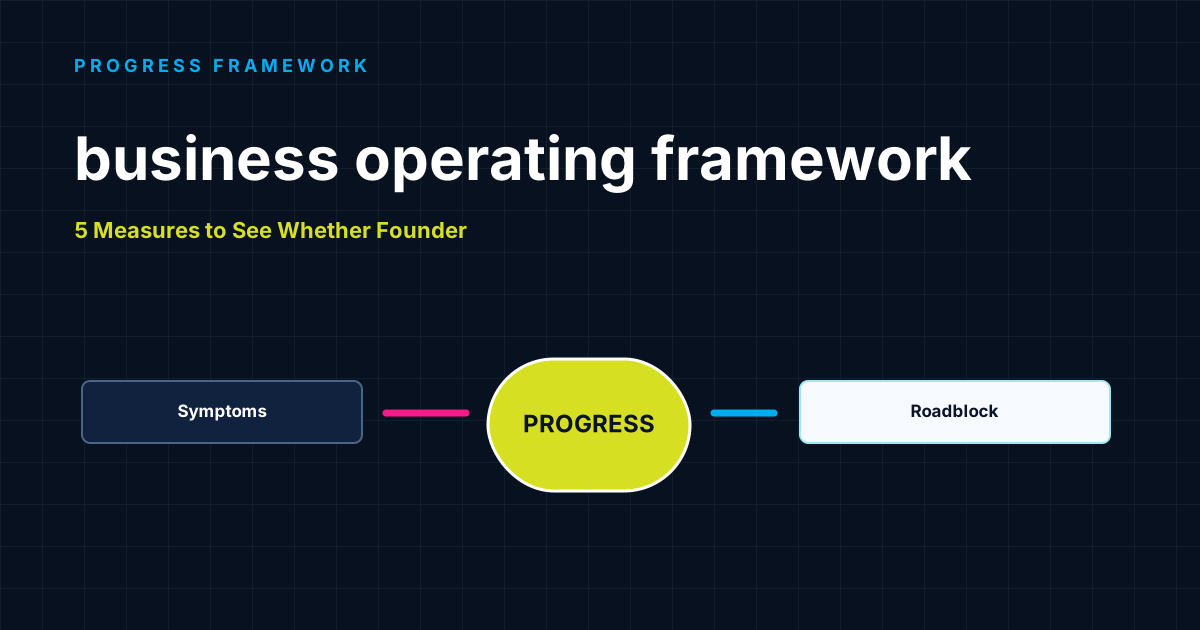
The PROGRESS Lens
Map where client questions and exceptions currently return to the founder.
Identify whether the issue is missing context, unclear ownership, vague standards, or weak escalation rules.
Define the client outcome the delivery lead owns from start to finish.
Create a client record, delivery workflow, quality examples, and decision lanes.
Surface high-risk clients, promises, margins, and exceptions before they become emergencies.
Improve one recurring delivery pattern before redesigning the whole client journey.
Mini Case
The team could deliver the work but not hold the client relationship.
A founder of a professional-services company was included in every client exception. The team knew the work, but not the history behind pricing, scope, or relationship sensitivity. The fix was not more meetings. A delivery lead took end-to-end accountability, client notes moved into one shared record, common exceptions gained decision rules, and a weekly review surfaced risks early. The founder still joined strategic client conversations, but routine delivery stopped routing through them.
What To Do Next
Move one client-delivery pattern into a team-owned system.
Choose one repeatable client journey
Start with onboarding, delivery, renewal, or issue resolution.
Name the outcome owner
Give one person responsibility for the client result, not just a set of tasks.
Create one client record
Put commitments, preferences, history, risks, and next decisions in one place.
Define the delivery standard
Show what good quality, communication, timing, and follow-up look like.
Set exception lanes
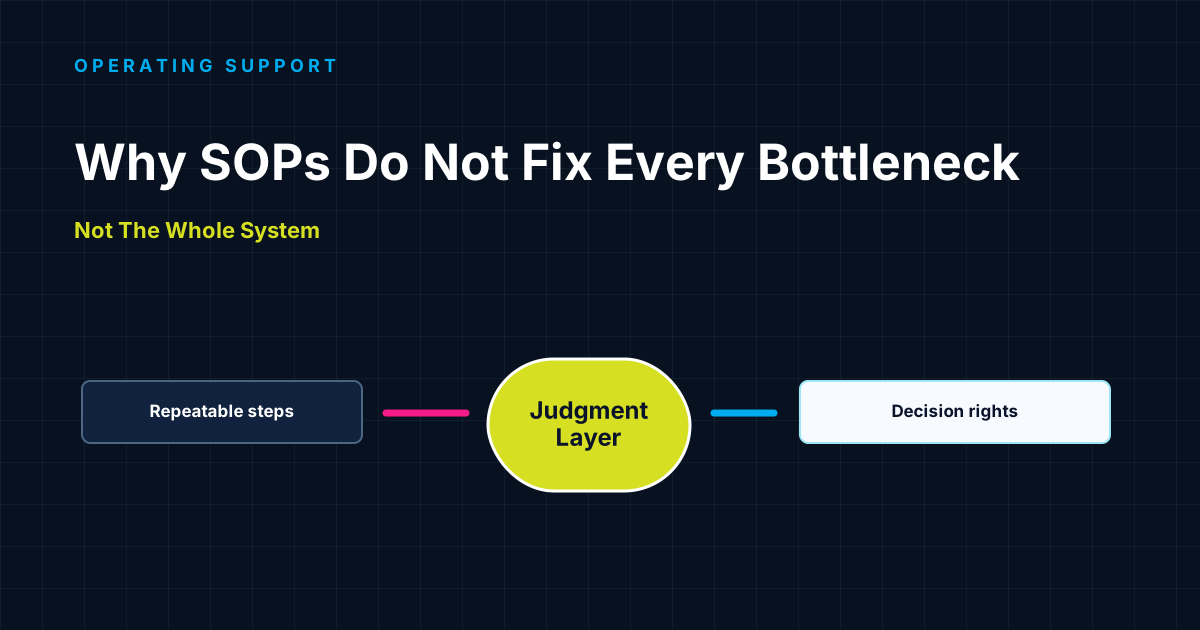
Clarify what the team can resolve, what needs review, and what the founder should still see.
Review delivery risk weekly
Discuss client signals, repeated exceptions, margin pressure, and blocked work before it reaches the founder ad hoc.
Common Mistakes
Avoid turning client delivery into a handoff without ownership.
Sharing tasks but not client context
A checklist cannot replace the history behind the relationship.
Keeping every important client with the founder
The team cannot develop judgment if it never owns the outcome.
Escalating every exception
Escalation should protect truly sensitive decisions, not replace operating rules.
Measuring only activity
Track client outcomes, risk, quality, and margin, not just completed tasks.
Adding a CRM without a delivery rhythm
A tool helps only when the team uses it to make decisions and follow through.
Treating a complaint as the first signal
Review leading indicators before the client experience breaks.