Quick Answer
Check the resources and exposures around your most important outcomes: who can own the work, what information they need, what systems support them, what risk remains hidden, and what happens if a key person is unavailable.
The Core Idea
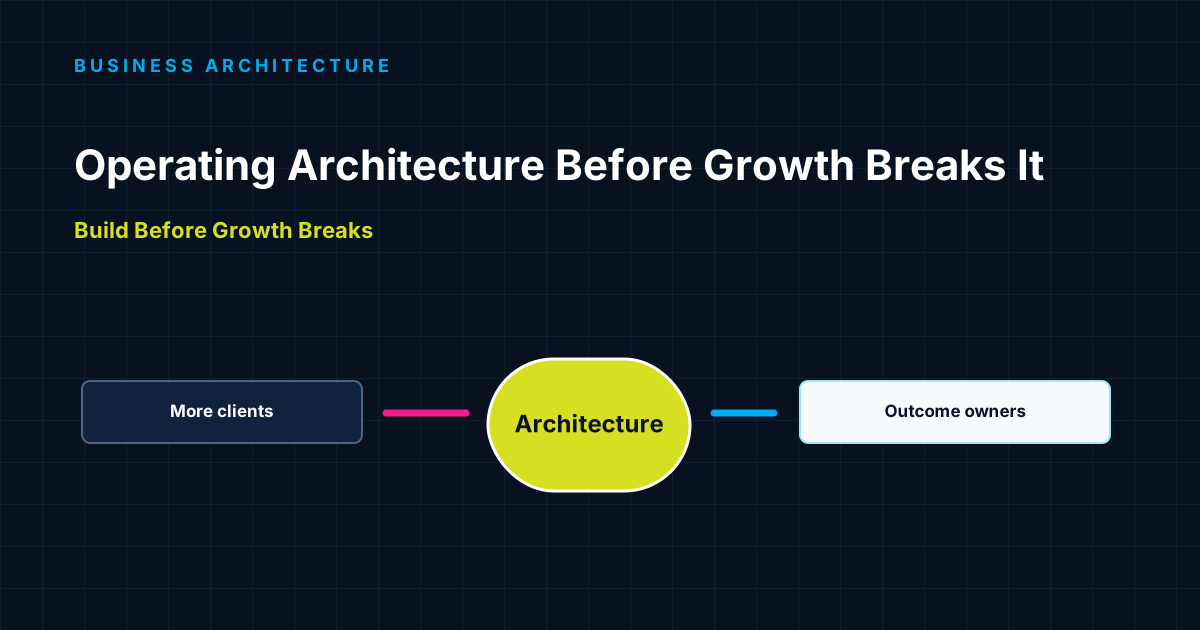
Resources create capacity; exposure reveals where capacity can fail.
Hiring or buying software can increase capacity. It does not automatically reduce fragility. A company can have a capable team and still depend on one person for client context, quality judgment, a critical decision, or a system only they understand. The operating design must provide support for important work and reduce the single points where it can break.
Why This Happens
Founders see the visible gaps before the hidden dependencies.
It is easy to notice that the company needs more time, people, or tools. It is harder to see the exposure created by unclear ownership, undocumented context, weak succession, or decisions that only one person can make. Growth makes those dependencies more consequential.
The PROGRESS Lens
Identify the outcomes the business cannot afford to interrupt.
Find the missing support that limits those outcomes today.
Define the level of resilience and capacity the next stage requires.
Assess people, information, tools, time, standards, and leadership support.
Name the dependencies, risks, and assumptions that could break the outcome.
Connect resilience to client trust, founder freedom, and transferable value.
Close the highest-risk gap before adding broad complexity.
Mini Case
A company discovered that its real risk was not staffing.
A founder thought the team needed another coordinator because work slowed whenever demand increased. The resource and exposure check showed that the real issue was a single delivery lead who held every client relationship and every exception rule. The company trained a second owner, created a shared client record, and set decision lanes. Adding capacity became useful only after the hidden dependency was reduced.
What To Do Next
Run five checks around a critical business outcome.
Check the owner
Can more than one person understand and carry the outcome if needed?
Check the information
Is the required context visible, current, and accessible to the people doing the work?
Check the operating support
Do roles, workflows, tools, standards, and rhythm help the work move reliably?
Check the dependency
What person, decision, client, system, or assumption could stop the outcome?
Check the consequence
What would happen to quality, cash, trust, or momentum if that dependency failed next week?
Common Mistakes
Avoid treating every missing resource as a hiring problem.
Adding people before clarifying ownership
More people can create more coordination drag.
Counting tools as operating capability
A tool without workflow and decision rules may add noise.
Ignoring key-person exposure
If one person is irreplaceable, the business has a design risk.
Treating risk as a compliance exercise
Exposure should inform real operating priorities.
Trying to eliminate all risk
Focus on the exposures that threaten critical outcomes.
Checking resilience only after a disruption
Build visibility before the business is forced to learn the hard way.