Quick Answer
Map your business before making a major change by documenting the current operating picture, identifying the lead roadblock, defining the outcome that matters, and choosing the smallest next move that changes the system.
The Core Idea
A solution is only as useful as the picture it is based on.
A new hire may help. Automation may help. Documentation may help. A reorganization may help.
But each solution assumes something about the actual problem. If the constraint is unclear ownership, another tool will not create accountability. If the constraint is missing decision rights, a new manager may inherit the same escalation pattern. If the constraint is unclear priorities, a workflow redesign can simply make the wrong work move faster.
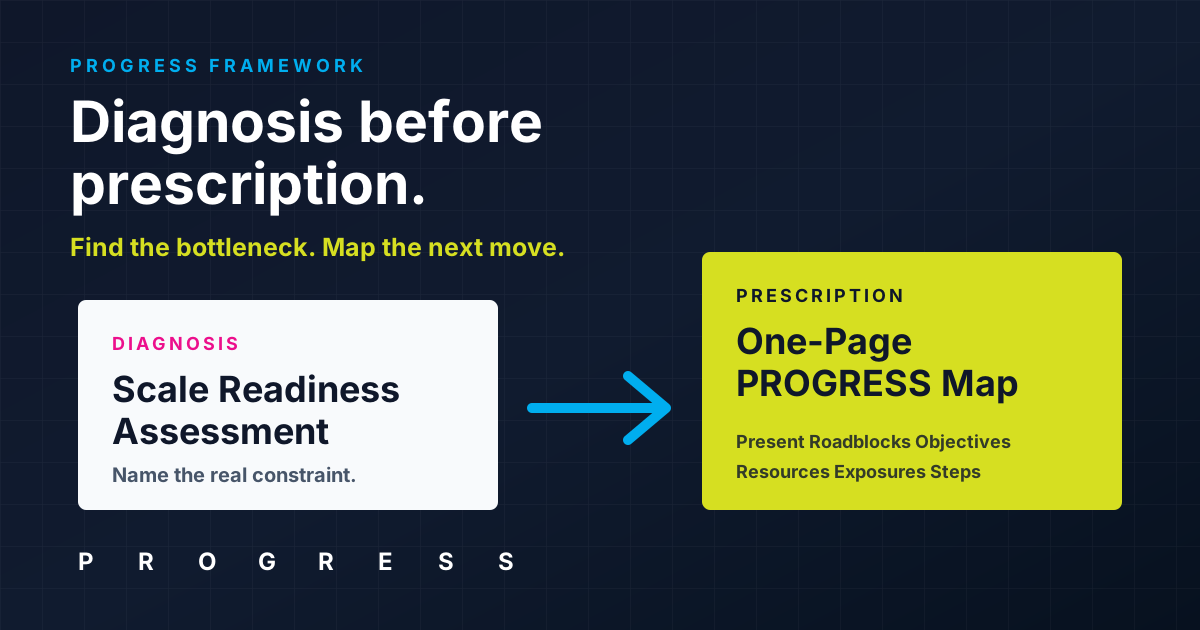
The PROGRESS Framework starts with the present so a founder can see the operating system before trying to improve it.
Why This Happens
Symptoms are easier to see than the patterns beneath them.
Founders experience delay, pressure, missed handoffs, client complaints, and repeated questions. These are real. But they often point to a smaller number of structural roadblocks. Mapping creates a shared language for the present state and prevents the loudest symptom from dictating the investment.
The PROGRESS Lens
Capture how work, decisions, people, tools, and results operate today.
Identify the constraint creating the greatest drag.
Define what the business needs to achieve next.
Name the human and commercial benefit of resolving the issue.
See what capability, capacity, information, or support is missing.
Surface the risks of acting too slowly or choosing the wrong solution.
Connect the change to the founder's larger role and business direction.
Turn the map into a focused next sequence.
Mini Case
A founder stopped debating whether to hire or automate.
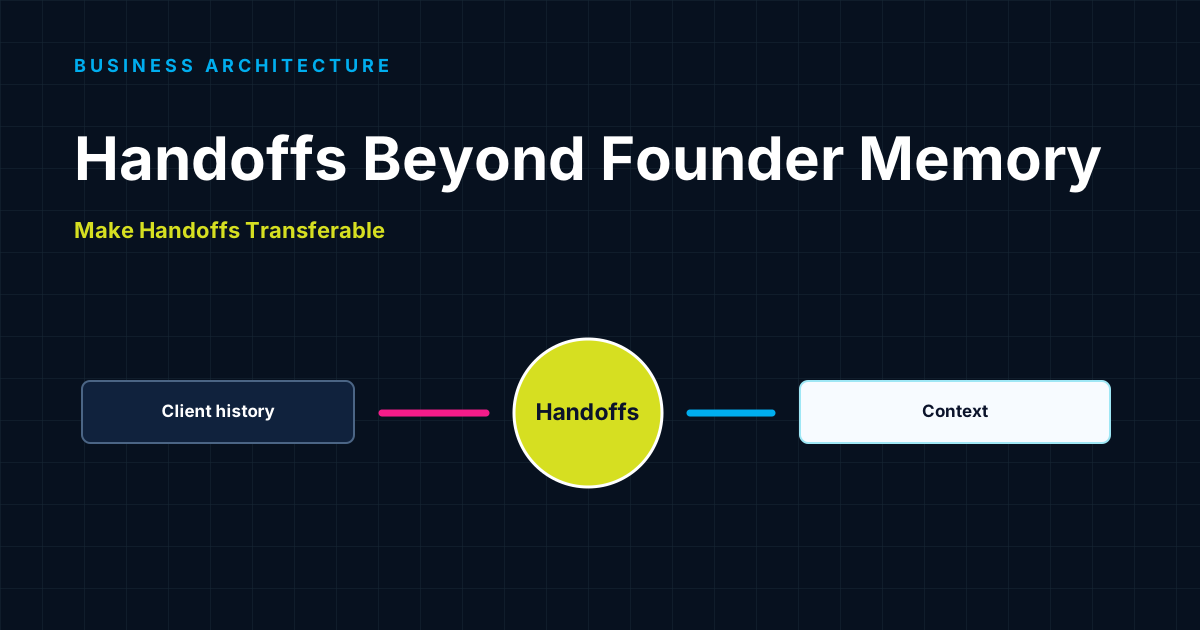
A founder believed the team needed project-management software because deadlines kept slipping. The map showed that the real problem was unclear ownership at the point where sales handed work to delivery. The company first defined the handoff, owner, and client commitments. The software then supported a working process instead of becoming another place to store confusion.
What To Do Next
Create a current-state map before choosing a solution.
Describe the present
Capture the people, workflows, decisions, tools, and outcomes involved in the problem.
List recurring symptoms
Note what repeats, stalls, escalates, or creates rework.
Find the lead roadblock
Ask which underlying constraint would make several symptoms easier if it changed.
Choose the next smallest move
Decide what to clarify, test, assign, or measure before committing to a larger investment.
Common Mistakes
Avoid mapping only the future you want.
Starting with a preferred solution
Map the present before deciding that a hire or tool is the answer.
Capturing only tasks
Include decisions, ownership, standards, risks, and review rhythm.
Treating every issue as equal
Find the lead constraint rather than a long list of unrelated improvements.
Making the map too detailed
Use enough detail to choose the next move, not enough to document every action.
Keeping the map private
The people closest to the work often see different parts of the system.
Leaving without steps
A useful map ends with a focused action sequence.