Quick Answer
A reliable handoff tells the next owner what has changed, what matters, what is complete, what remains risky, and what they now own without needing the founder to fill the gaps.
The Core Idea
A handoff needs an agreement, not just an update.
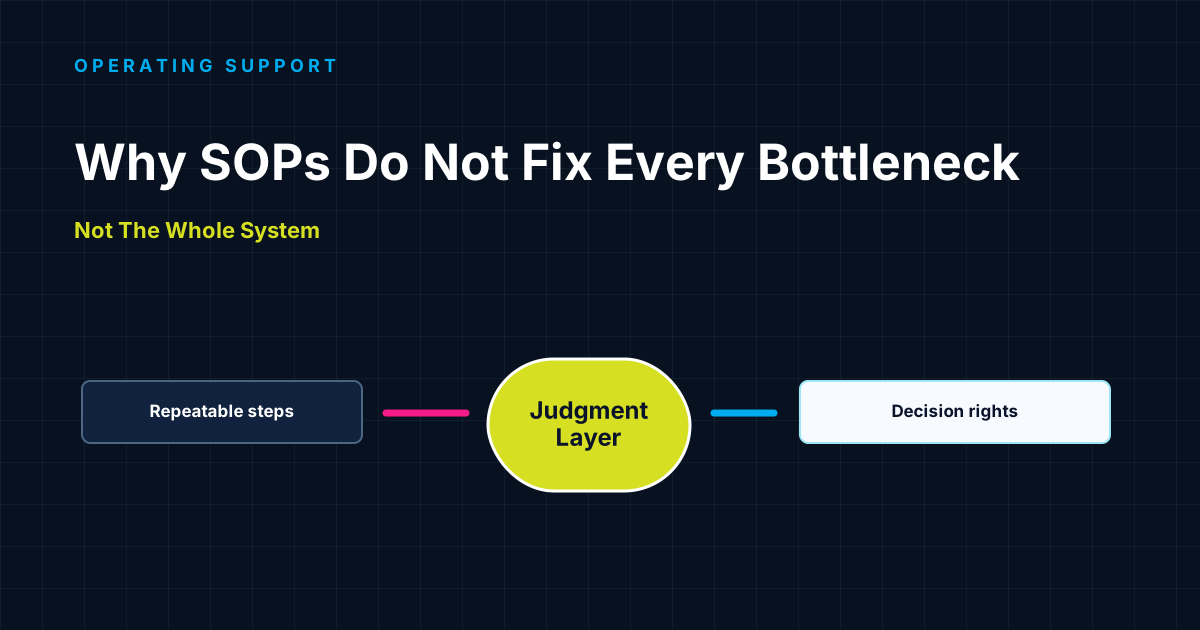
The message "it is with you now" does not tell the next owner what they need to know or whether the work is ready. A reliable handoff includes a clear trigger, relevant context, completion criteria, ownership transfer, and an escalation path. That makes the workflow usable even when the founder is unavailable.
Why This Happens
Informal coordination works until the company has too many moving parts.
In a small team, people can walk across the room and fill in gaps. As work expands across functions, clients, time zones, or specialized roles, those gaps become delay, rework, and risk. Founder memory then becomes the fastest way to reconnect the picture, which makes the founder feel necessary.
The PROGRESS Lens
Identify where work most often waits or returns after changing hands.
Find whether the missing element is context, readiness, ownership, standard, or escalation.
Define the result the handoff must protect.
Create a shared record, template, checklist, or workflow stage where it actually helps.
Flag the handoffs that could harm client trust, quality, cash, or compliance.
Improve one high-frequency handoff before mapping every process.
Mini Case
The founder stopped reconnecting sales and delivery.
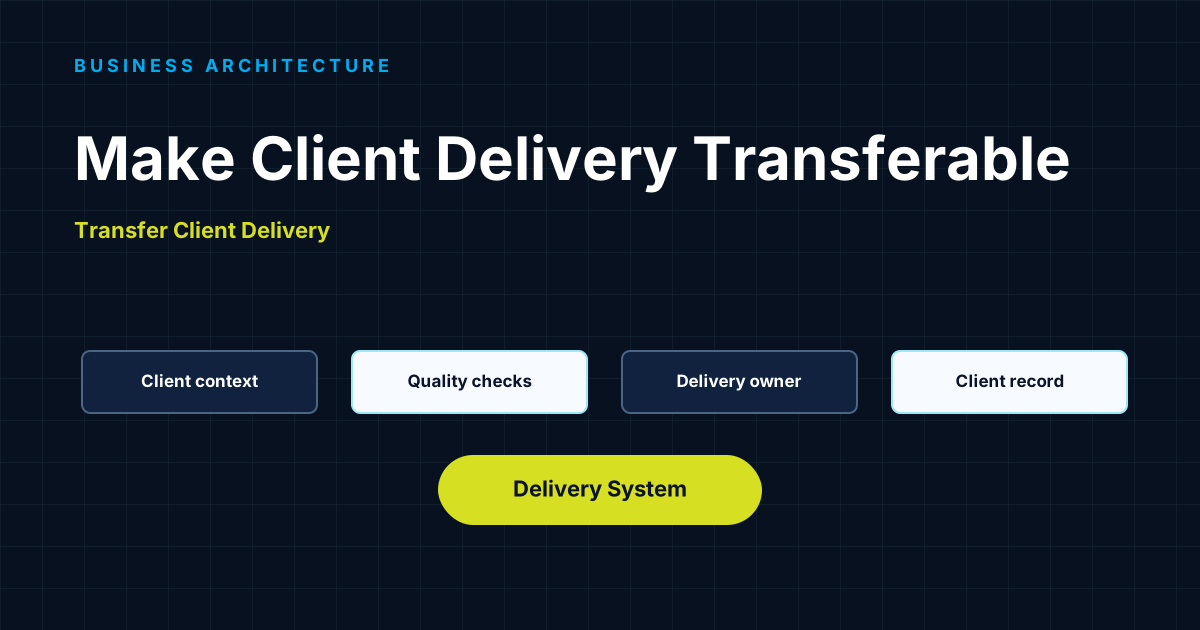
A services firm had recurring client-launch issues because sales knew what had been promised while delivery discovered details only after the work began. The founder kept joining kickoff calls to provide the missing context. The company created a shared launch record, defined what had to be complete before the handoff, named a delivery owner, and reviewed any exceptions weekly. The founder no longer had to translate the sale into delivery from memory.
What To Do Next
Design one handoff as an operating agreement.
Choose the handoff
Start where delay, rework, client risk, or founder involvement is highest.
Define the trigger
State exactly when work is ready to move to the next owner.
Make context visible
Capture the information, commitments, standards, and risks the next owner needs.
Confirm ownership and follow-up
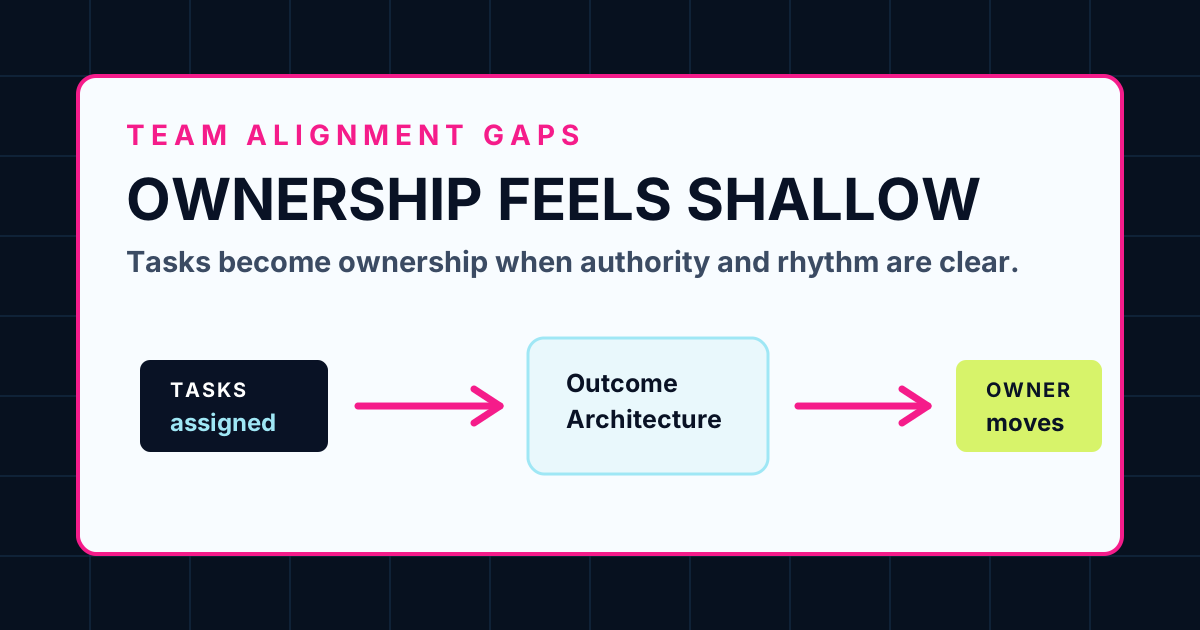
Name who owns the next outcome, what happens if readiness is missing, and when the team reviews recurring issues.
Common Mistakes
Avoid treating handoffs as a communication problem only.
Sending a long update without a readiness standard
Information is not useful if the next owner cannot tell whether action can begin.
Making the template too heavy
Capture what is needed for the next decision, not every historical detail.
Leaving ownership ambiguous
A handoff is incomplete until someone owns the next result.
Ignoring exceptions
Define what happens when a handoff arrives incomplete or risky.
Fixing only one team's behavior
Most handoff issues live between roles and need a shared agreement.
Skipping review
Repeated handoff problems are feedback on the workflow design.